
Cashmycell's monthly pricing data shows the Samsung Galaxy S24 Ultra retained its resale value for more than a year before experiencing its steepest decline during Samsung's 2025 flagship refresh. The trend illustrates how launch cycles, supply, and buyer demand shape smartphone depreciation over time.
The resale curve can be divided into three distinct phases: early stability, launch-cycle depreciation, and eventual price stabilisation.
Galaxy S24 Ultra Resale Value Trend
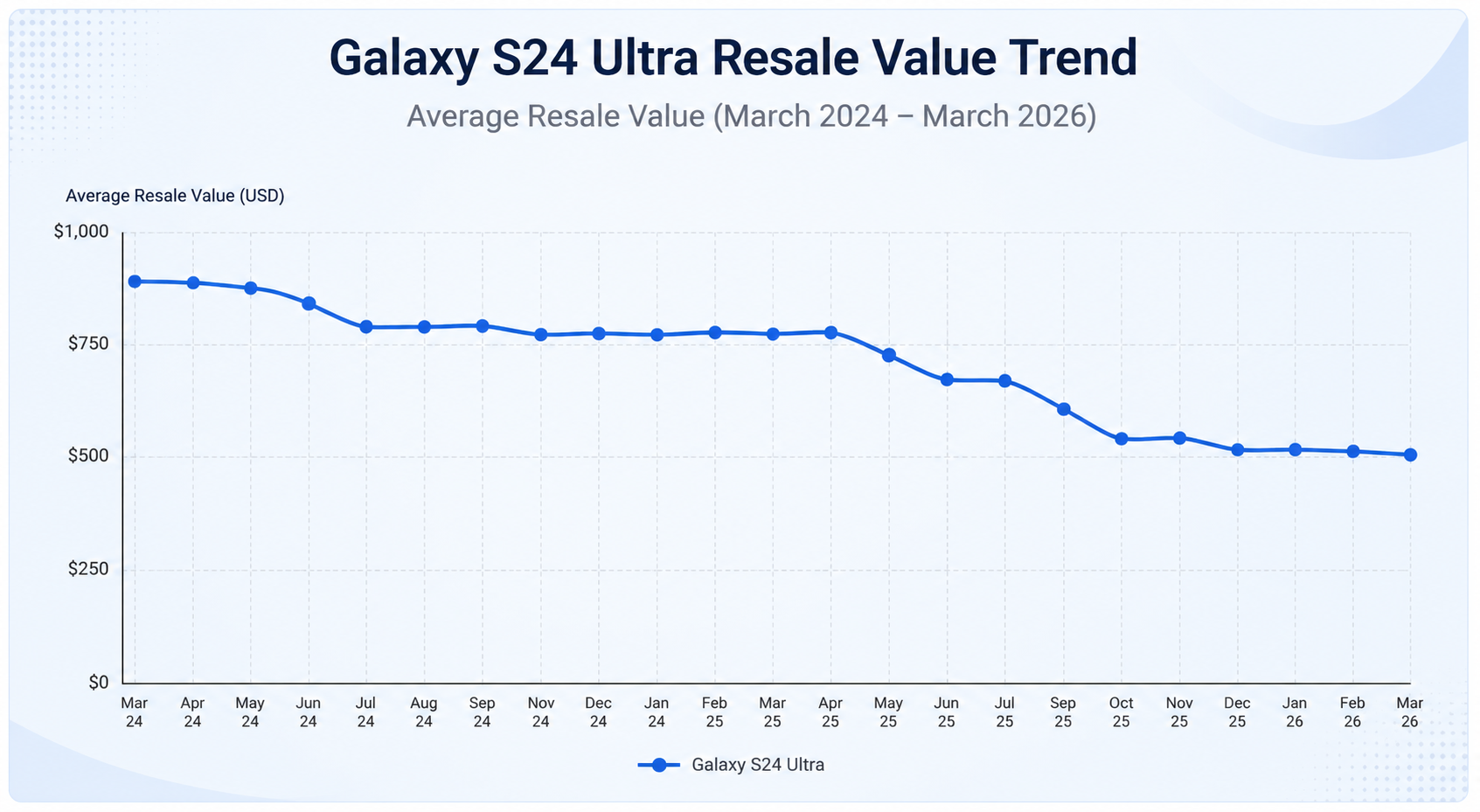
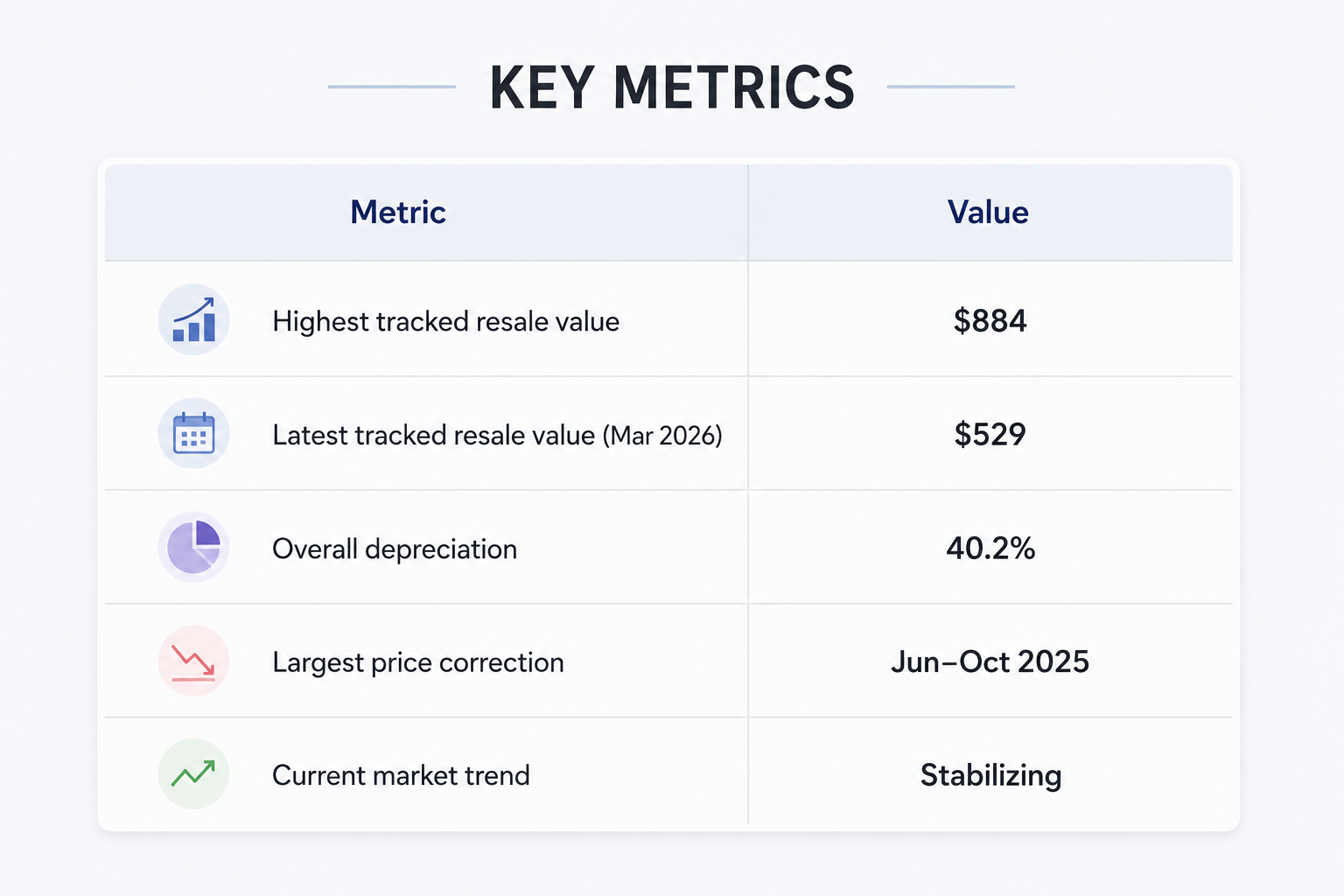
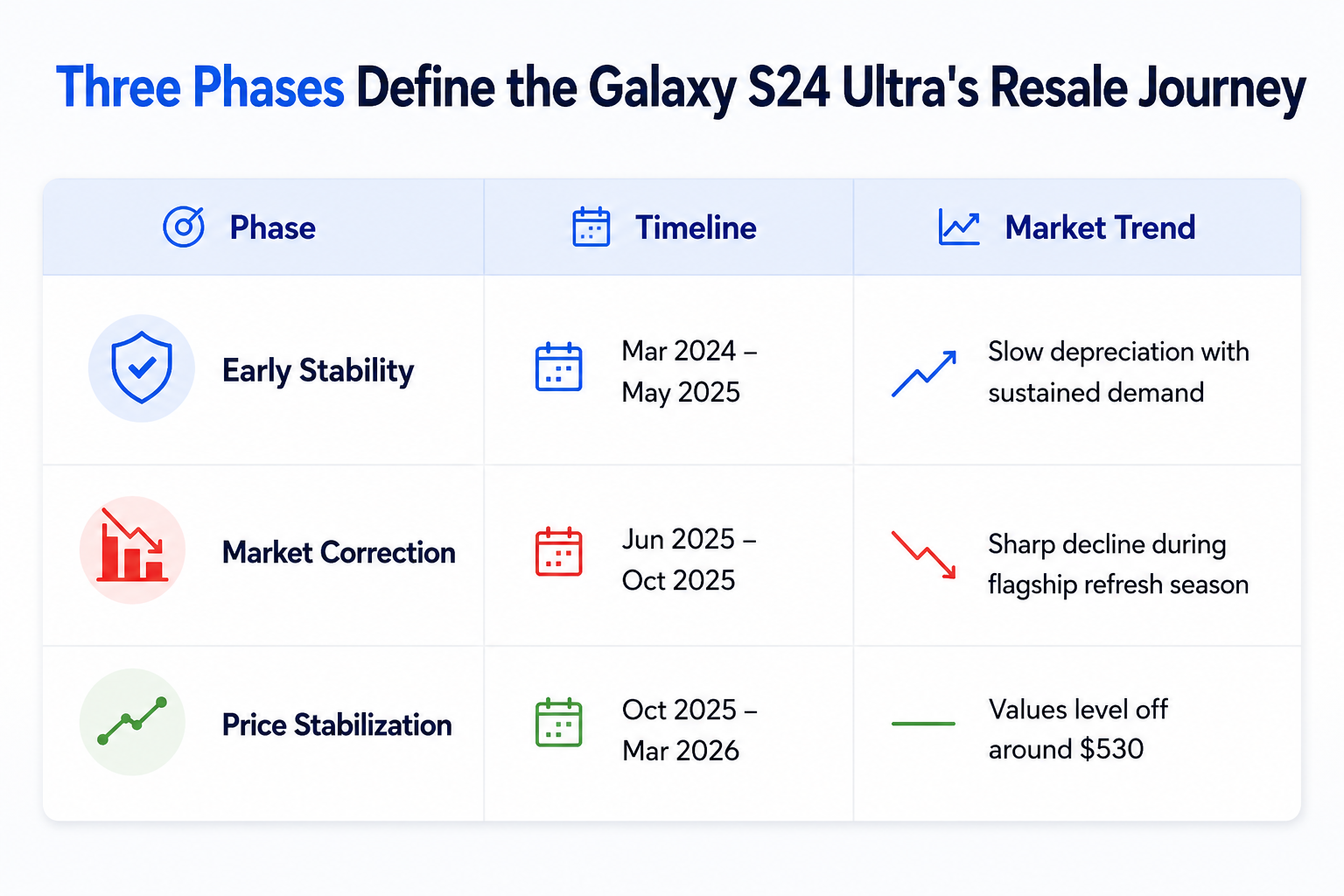
This pattern mirrors the broader flagship smartphone market, where launch demand, trade-ins, and annual refresh cycles shape resale pricing.
Year One: Strong Value Retention Kept Prices Elevated
The first year after launch stands out for its relatively modest depreciation.
Cashmycell's pricing data shows the Galaxy S24 Ultra entering the resale market at approximately $884 in March 2024. By July, the average resale price had declined to $798, representing a drop of roughly 10%. More importantly, prices remained within the $780 - 800 range through much of early 2025 instead of continuing a steady downward slide.
Several factors likely contributed to that performance:
- Samsung's premium Ultra branding continued to attract buyers.
- Seven years of software support improved long-term confidence.
- The Snapdragon 8 Gen 3 processor and 200MP camera system remained competitive against newer flagship devices.
- Limited pressure from newer Galaxy models during the first year helped sustain resale demand
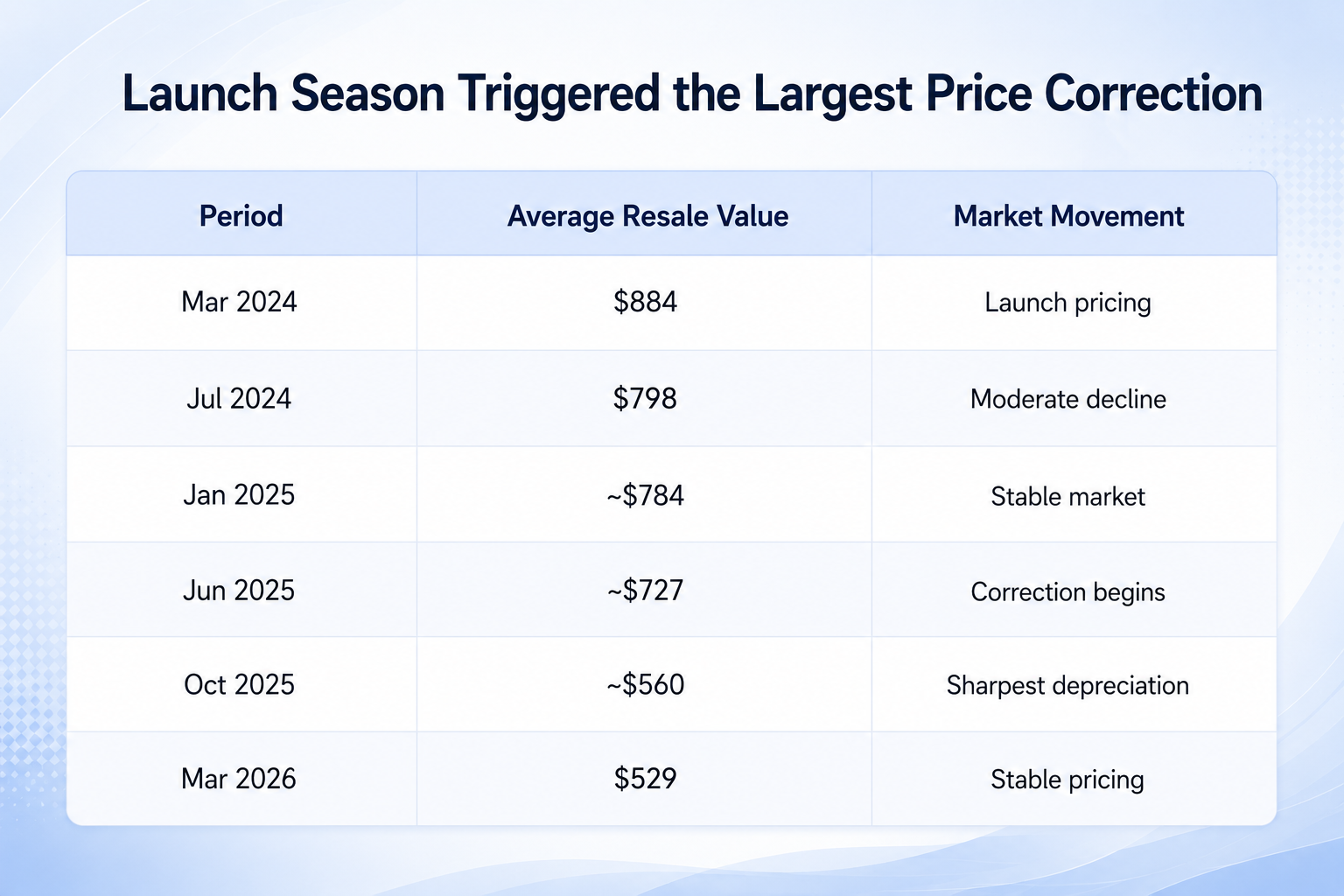
The resale story changed dramatically during mid-2025. Between June and October, average values fell from roughly $727 to $560, marking the steepest correction in the device's tracked history. Greater supply combined with softer demand places downward pressure on resale prices across nearly every flagship smartphone.
This seasonal correction has become one of the most consistent patterns in smartphone depreciation.
Recent Pricing Suggests the Market Is Finding a Floor
Since October 2025, the resale curve has flattened considerably.
Average resale values have remained close to $529 through early 2026, with relatively minor month-to-month movement. While future flagship launches could still influence pricing, the sharpest depreciation appears to have already occurred.
Mature flagship devices typically experience slower depreciation as supply and demand begin to stabilize.
How the Galaxy S24 Ultra Compares With Older Samsung Flagships
Using Cashmycell data to compare Galaxy S24 Ultra with earlier Galaxy generations, including the S20 and S10 series, the following insights emerge.
Even after two years, the Galaxy S24 Ultra continues to command noticeably higher resale prices than earlier Galaxy flagships.
Several product characteristics continue to support resale demand:
- Snapdragon 8 Gen 3 flagship performance
- 200MP primary camera
- Integrated S Pen functionality
- Titanium frame
- Extended Android software support
These features help keep the device relevant in the secondary market, even as newer Galaxy models become available.
What the Data Means
For Buyers
Current resale prices are approximately 40% lower than the highest tracked values, making the Galaxy S24 Ultra significantly more affordable than it was during its first year. Slower depreciation also reduces the risk of near-term price drops.
For Sellers
The tracker suggests that the device has already experienced its steepest depreciation period. While future Galaxy launches may introduce smaller corrections, pricing has become considerably more stable since late 2025. Monitoring seasonal trends remains one of the most effective ways to maximize resale value.
Key Takeaways
Cashmycell's pricing data shows that the Galaxy S24 Ultra retained its value well during its first year before depreciation accelerated during Samsung's 2025 flagship refresh. Rather than declining at a constant rate, its resale value was shaped by broader market cycles, trade-in activity, and shifting consumer demand.
For buyers, much of the depreciation has already occurred, making the Galaxy S24 Ultra a stronger value proposition in the used smartphone market. For sellers, the data reinforces the importance of timing, as annual launch cycles continue to influence resale pricing.
Ultimately, long-term market trends provide a more reliable measure of smartphone value than any single resale estimate.