
What Is My iPhone Actually Worth?
Selling an old iPhone is weirdly confusing now. Two people can list the exact same model online and still get completely different offers. One seller gets decent responses within an hour, while another barely gets messages at all. A 128GB iPhone in excellent condition with strong battery health will usually sell for much more than the same device with scratches, battery issues, or activation lockproblems.
And honestly, newer iPhones are not the only ones that still have value. Even older devices like the iPhone X or iPhone 8 can still sell if they’re usable or repairable. Before selling your iPhone, it helps to understand what buyers actually pay attention to and why resale prices change so quickly once newer models launch.
If you’ve ever tried selling a phone through Facebook Marketplace or local classifieds, you’ve probably already seen this happen. People will message asking “final price?” within seconds, offer absurdly low numbers, or disappear halfway through the conversation.
One reason resale values can feel unpredictable is that smartphone pricing changes continuously. CashMyCell's analysis of historical phone pricing data shows that device values rarely remain static for long, particularly around major product launches and upgrade cycles.
For sellers, that means timing can be almost as important as the condition of the device itself. A phone that sits unused for another year may still work perfectly well, but market demand and resale opportunities can change considerably during that period.
Why Some iPhones Sell for More Than Others
A lot of sellers assume the model name alone decides the resale value. It doesn’t.
Storage matters way more than most casual sellers expect. A lot of buyers have no interest in 64GB models anymore because apps, photos, and videos fill up space ridiculously fast now. Higher-storage variants usually sell faster because buyers don’t want to run out of space a few weeks later. In many cases, a 256GB model gets noticeably better offers than the 64GB version of the same phone.
Battery health is one of the first things serious buyers check now. Once it drops under 80%, people immediately start negotiating because they assume they’ll need a battery replacement soon anyway, especially on older iPhones.
Then there’s the physical condition. Owners usually stop noticing tiny scratches after a while, but buyers definitely don’t. The second someone sees dents around the frame or scratches near the camera, they start lowering their offer mentally. Buyers usually notice cosmetic damage immediately. Cracked screens, dents, damaged cameras, or back glass issues can reduce resale value pretty quickly.
Unlocked iPhones are always easier to sell. Most buyers don’t want to deal with carrier restrictions anymore, especially if they’re purchasing the phone for a family member or using it while travelling. Buyers prefer phones that they can simply insert their SIM card into without worrying about carrier restrictions.
And if Activation Lock or Find My iPhone is still enabled, many buyers won’t even consider purchasing the device.
What Buyers Usually Check Before Purchasing
Before someone agrees to buy your iPhone, they’ll normally look at a few basic things first:
- Whether the phone powers on properly
- Battery health percentage
- Screen and body condition
- Storage capacity
- Face ID or Touch ID functionality
- Camera and speaker condition
- Whether the device is unlocked
- If Find My iPhone has been turned off
- Whether there are any pending EMI or blacklist issues
Most buyers care less about tiny specifications and more about whether the phone feels reliable enough for daily use.
How to Check Your iPhone Model and Details
If you’re unsure which iPhone you have, go to:
Settings → General → About
There you’ll find:
- Model Name
- Model Number
- Storage Capacity
That information is useful because resale prices can vary significantly between similar-looking models.
For example, an iPhone 14 Pro and a regular iPhone 14 may look similar to some people, but their resale values are usually quite different.
Older iPhones Aren’t As “Dead” As People Think
You can actually watch prices drop in real time around new iPhone announcements. The moment Apple reveals a newer model, resale listings suddenly flood the market, and buyers become more selective overnight. One mistake people make is assuming older iPhones are worthless once newer models launch. That’s usually not true.
Devices like the iPhone 11, iPhone XR, and even the iPhone 7 can still sell if they’re functional.
Buyers typically look for a few practical things, such as whether the phone turns on properly, whether the screen still looks decent, and whether the battery can comfortably last through normal daily use.
Even damaged iPhones can still have some resale value because repair shops often buy them for spare parts or refurbishment.
Not only that, but even phones with cracked back glass still get sold pretty regularly. Some buyers repair them cheaply and resell them, while local repair shops often buy damaged devices purely for parts. Displays, cameras, batteries, and even charging ports still have resale demand.
Which iPhone Models Hold Value Better?
Not all iPhones depreciate at the same rate.
In general, premium Pro and Pro Max models tend to retain value more effectively because they start with higher retail prices, include flagship features, and often remain desirable for longer in the second-hand market.
Several factors contribute to stronger long-term demand ranging from higher original specifications, better camera systems, larger storage configurations, longer useful lifespan for power users and strong demand from refurbished-device buyers.
This helps explain why older Pro models can sometimes outperform newer standard models in the resale market.
For buyers looking for value, a previous-generation Pro device is often viewed as a better purchase than a newer entry-level option, which can help support resale demand.
Prices also tend to drop around Apple’s newer iPhone launch season, which is why many sellers try to upgrade before that period.
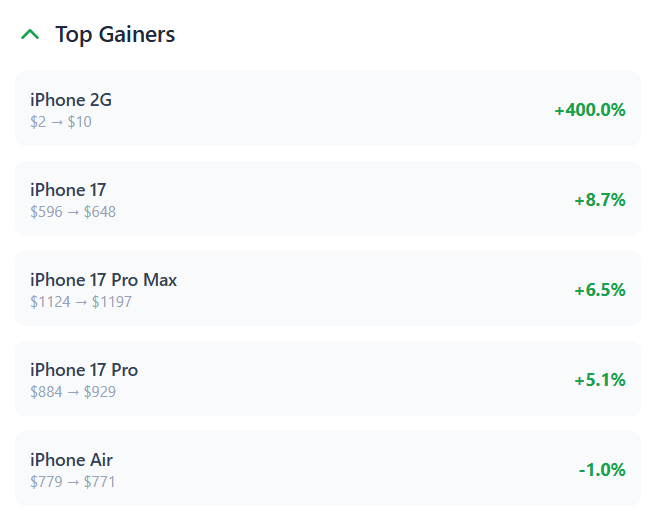
CashmyCell's proprietary price analysis of over 48 iPhone models from 2021 to 2026 shows the top gainers as follows:
Trade-In vs Selling Your iPhone Yourself
Trade-ins are popular mostly because they remove the headache. You hand over the phone, get a quote, and you’re done. No endless buyer messages. No negotiating. No worrying about scams or last-minute cancellations. The downside is pretty obvious too: convenience usually costs money. Independent resale almost always gives better returns if you’re patient enough to deal with buyers yourself.
You hand over the old device, get store credit or a discount, and the process is done quickly.
That convenience is the main reason trade-ins remain popular.
But selling the phone yourself will often get you a better price if you’re willing to spend extra time dealing with buyers, negotiations, and listings.
Trade-ins are definitely easier, but in most cases, you’ll get less money than if you sell the phone yourself. Convenience is really what you’re paying for.
- want a quick process,
- don’t want to negotiate,
- or simply want instant value toward a new phone.
Reselling makes more sense for people trying to maximize the amount they receive.
Some buyback companies also advertise unrealistically high prices at first and then reduce the quote after inspection because of “minor damage” or battery wear. That doesn’t happen everywhere, but it’s common enough that sellers should be aware of it.
Instant Buyback Services
Buyback companies have also become pretty common now.
These services usually:
- inspect the iPhone,
- offer a quote,
- and transfer payment quickly after verification.
For people who need fast cash or don’t want the hassle of finding buyers online, this option is often simpler than reselling independently.
The tradeoff, though, is that direct resale normally gives slightly better returns.
A Few Things Worth Doing Before Selling
Before handing over your iPhone to someone else, spend a few minutes preparing it properly.
Back up your data first. Then:
- sign out of iCloud,
- disable Find My iPhone,
- erase all content and settings,
- and remove your SIM card.
It sounds basic, but cleaning the phone properly genuinely helps. A fingerprint-covered screen and dusty camera lenses make a device feel older immediately, even if it works perfectly fine. A clean device simply looks better during inspection.
It’s also worth comparing multiple offers instead of accepting the first quote immediately. A surprising number of people undersell their iPhones simply because they don’t check current resale prices elsewhere.
And if the repair cost is small, fixing minor issues beforehand can sometimes increase the final resale value enough to make it worthwhile.
So, Does Your iPhone Still Have Value?
In most cases, yes.
Even older iPhones can still be sold if they’re functional, unlocked, and in decent condition. Weirdly enough, keeping the original box and charging cable still helps sometimes. It doesn’t dramaticallyincrease the value, but buyers often feel more comfortable purchasing a phone that looks properly cared for, and if a device is damaged, it may still have value for repairs, refurbishment, or spare parts.
At the end of the day, used iPhone pricing is mostly practical. Buyers care about condition, battery health, storage, and whether the phone feels reliable enough to use daily. That’s really it.
A clean, fully functional older iPhone will almost always attract interest, even if it’s not the newest model anymore. And spending a few extra minutes comparing offers before selling can easily make a noticeable difference in what you end up getting paid.