
Each year, Apple announces its annual iOS software upgrade, anticipated by millions of iPhone users across the globe. These upgrades introduce new features designed to enhance performance, security, and overall user experience.
Apple recently announced the launch of iOS 27 at the Worldwide Developers Conference (WWDC). While the beta version (an early release for developers and technology enthusiasts to test) is already available, the public version is set to arrive in September 2026.
As a result, the buzz has led to several questions in every user’s minds, including – what’s new for iPhone users, which iPhones are compatible, and should everyone upgrade?
Here’s everything you need to know.
Supported Devices: Which iPhones are compatible with iOS 27?
Compatibility
While the new features look extremely tempting, the question is : Is the new software upgrade compatible with your current iPhone? If you are currently using iPhone 11 or any newer model, including iPhone SE (2nd and 3rd generation), the answer is yes. According to reports, these devices will support iOS 27. In short, all the phones that have been running iOS 26 will be able to enjoy the latest software upgrade as well.
Feature Limitations
Although iOS 27 supports a wide range of iPhones, some advanced Siri and Apple Intelligence features can run only on the latest hardware and newer models such as iPhone 15 Pro, iPhone 15 Pro Max, Air, and other recent variants. Older models will still get the core enhancements offered by iOS 27 including speed improvements, security additions, design changes, and other features that ensure increased efficiency. However, they may not receive certain AI-driven photo editing and management features.
Now that we know which phones are compatible with iOS 27, let’s understand what that means for buyers and sellers in the resale market.
How will the iOS 27 upgrade impact the resale market?
Apple’s continued software support also makes many older iPhone models highly appealing in the second-hand market. This means investing in a used iPhone 11 or any newer model can be a smart, budget-friendly move as the devices will continue to run the core iOS 27 version.
While buyers will be able to purchase these devices at a lower price without missing out on Apple’s latest operating system, sellers will benefit from a stronger resale value. This makes it a win-win for both buyers and sellers engaging on buyback platforms.
So, should you upgrade to iOS 27?
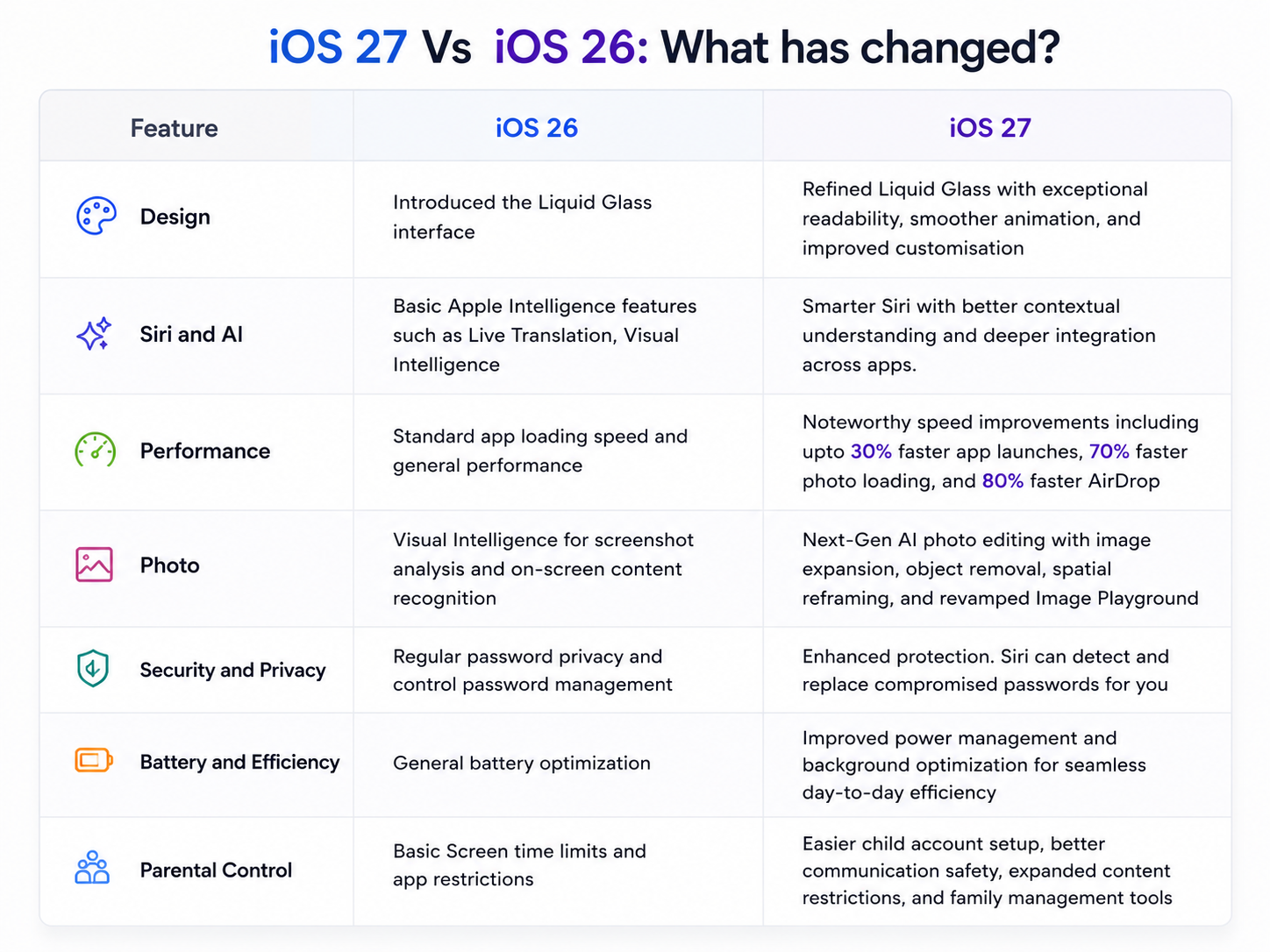
A short and simple answer is – YES. Because speed improvements like 30% faster app launches, 70% faster photo loading, and 80% faster AirDrop along with advanced AI and security features make iOS 27 a solid upgrade without any additional cost. Even if you don’t own the latest iPhone, an older compatible model will still benefit from numerous core enhancements with limited AI assistance. So, upgrading undoubtedly makes sense.
Still if you are concerned that the upgrade might carry bugs or slow down your phone in any manner, you can always sign up for Apple Beta Software Programme to test the pre-release. However, it’s advisable to install beta only on a spare apple phone to prevent any potential data loss or damage to your current device.
Or, you can wait a week after the full public release in September. Once the early user feedback on its performance is out, you can easily decide whether to upgrade or not.