
Samsung's foldables rarely stay out of the headlines. From thinner designs and tougher hinges to growing competition from Chinese manufacturers, every product cycle raises the same question for buyers: does spending nearly $2,000 on a foldable make financial sense once it's time to upgrade?
Cashmycell's monthly resale tracking of the Samsung Galaxy Z Fold 6 suggests the answer is more nuanced than many expect. While depreciation remains inevitable, the data points to a surprisingly stable resale curve after the initial post-launch adjustment, a pattern that separates the Fold 6 from many traditional flagship smartphones.
The Numbers Tell a Different Story Than Expected
With early models, questions that arose during resales were durability concerns, expensive repairs and rapid hardware improvements.
The Galaxy Z Fold 6 doesn't entirely escape that trend, but it appears to soften it.
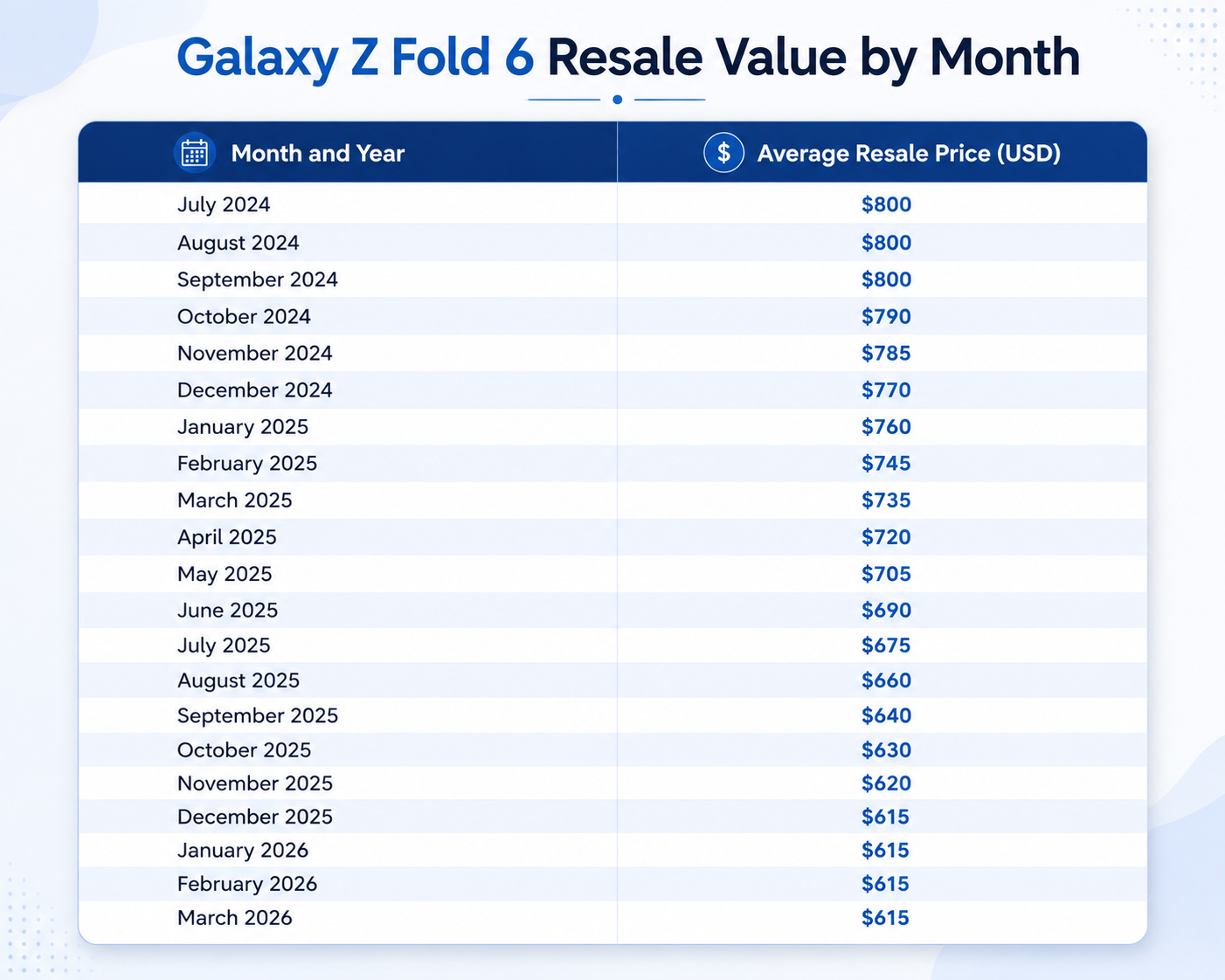
Cashmycell's pricing history shows resale values holding at $800 for the first three tracked months before entering a gradual decline through 2025. Rather than experiencing a dramatic collapse, prices eased lower in relatively small monthly increments with prices remaining virtually unchanged from December 2025 through March 2026. That plateau suggests the device may have reached its market equilibrium, where supply and buyer demand become more balanced.
Where Depreciation Accelerated
The sharpest downward movement occurred between mid-2025 and early autumn.
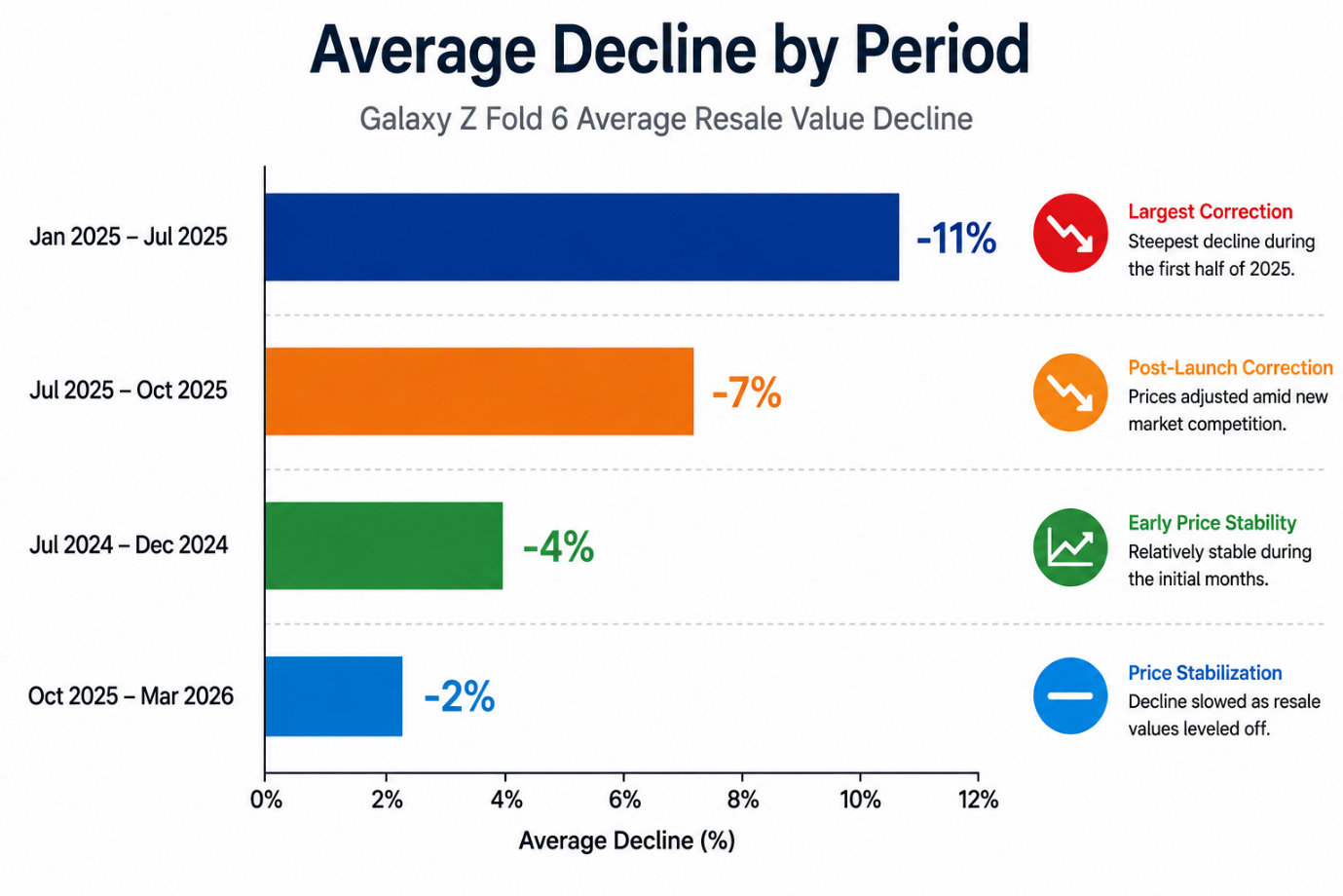
The slowdown during the final months is particularly noteworthy. Instead of continuing a steep slide, the Fold 6 entered a relatively flat pricing range.
This isn't unusual for premium smartphones. Once a device reaches an attractive price point for second-hand buyers, depreciation often slows considerably because demand begins absorbing available inventory more efficiently. What's surprising is that resale stability has improved even as competition has intensified, a sign that Samsung's foldable ecosystem has matured.
What This Means for Buyers
For prospective Fold 6 owners, depreciation matters almost as much as purchase price. Selling before a successor launches may still maximise resale value. Waiting too long after prices plateau offers limited additional downside, but also little upside.
Consumers planning to upgrade annually will still absorb meaningful depreciation. Those intending to keep the Fold 6 for two years or longer benefit from the fact that the resale curve becomes noticeably flatter over time.
The Bottom Line
The Galaxy Z Fold 6 hasn't eliminated depreciation; no smartphone does. But CashMyCell's monthly pricing history indicates a more encouraging trend than previous generations of foldables.
Decline from July 2024 through March 2026 is relatively measured for a premium foldable, especially considering the industry's rapid product cycles. More importantly, the data shows depreciation slowing substantially as the device ages.
For buyers weighing whether a foldable can retain value beyond the excitement of launch, the latest pricing history offers a reassuring signal: the Galaxy Z Fold 6 appears to lose value steadily, not dramatically, and that's becoming one of its strongest selling points.