The iPhone Air's resale value has fallen 40% to 45% within its first ten weeks, averaging a 43% decline across storage configurations. Now, with Apple's first foldable iPhone, the iPhone Duo, entering the market, one question is obvious: Is history about to repeat itself?
The answer may not be straightforward. The Duo doesn't appear to face exactly the same product-specific issues as the Air, but it enters a category where depreciation has historically been high. Its resale prospects therefore need to be considered separately from the Air's performance, particularly because foldable devices face their own resale challenges.
Why iPhone Air's resale value collapsed
The difference becomes clearer when the iPhone Air is compared with the other models in the iPhone 17 lineup:
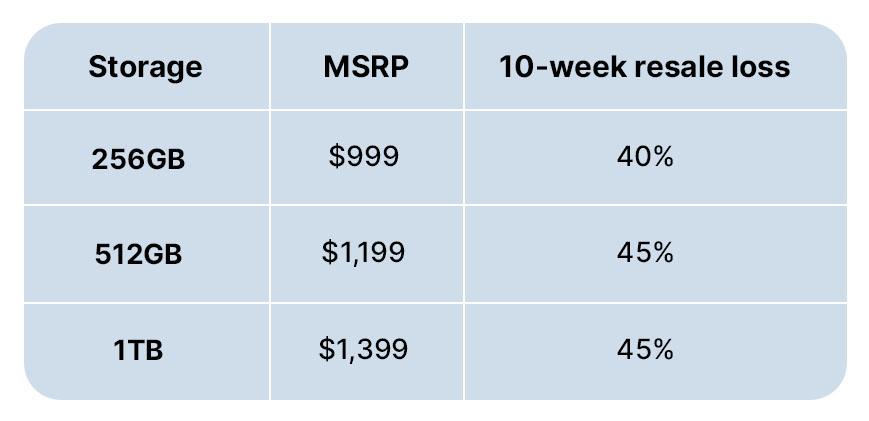
In comparison, the other models in the iPhone 17 lineup depreciated by an average of 35%, while the iPhone 17 Pro Max depreciated by approximately 25%. This puts the Air's resale decline well above both the other iPhone 17 models and Apple's premium offering.
The Air also differed from other iPhone models in several areas of functionality. It featured a single rear-facing camera, a mono speaker rather than a stereo setup, reported performance-throttling issues, and no wired video output. These differences may have influenced its resale performance, particularly if buyers placed greater value on the features available on other models.
Is iPhone Duo repeating the Air's mistake?
The iPhone Duo enters the market under different circumstances from the iPhone Air. Rather than being a scaled-back version of an existing iPhone, it introduces a new foldable form factor, with a 7.6-inch inner screen and a 5.4-inch cover screen, and is priced between $1,999 and $3,199 depending on storage.
Demand factors look nothing like those from the Air's launch:
- TrendForce expects about 5 million units to ship in 2026, with Apple commanding roughly 25% of the world-wide foldable market share in its first year, second only to Samsung.
- One analyst has subsequently reduced the shipment estimate, citing hinge manufacturing constraints rather than weaker demand.
- Analysts have described the Duo as a significant new hardware category for Apple, with its launch being closely watched as the company's entry into the foldable market.
However, strong initial demand does not necessarily translate into strong resale value, so the Duo's long-term depreciation will also depend on how the foldable category performs in the secondary market.
But foldables have their own resale problem
Strong demand doesn't necessarily mean strong resale value. As a category, foldable phones have historically depreciated faster than standard flagship smartphones.
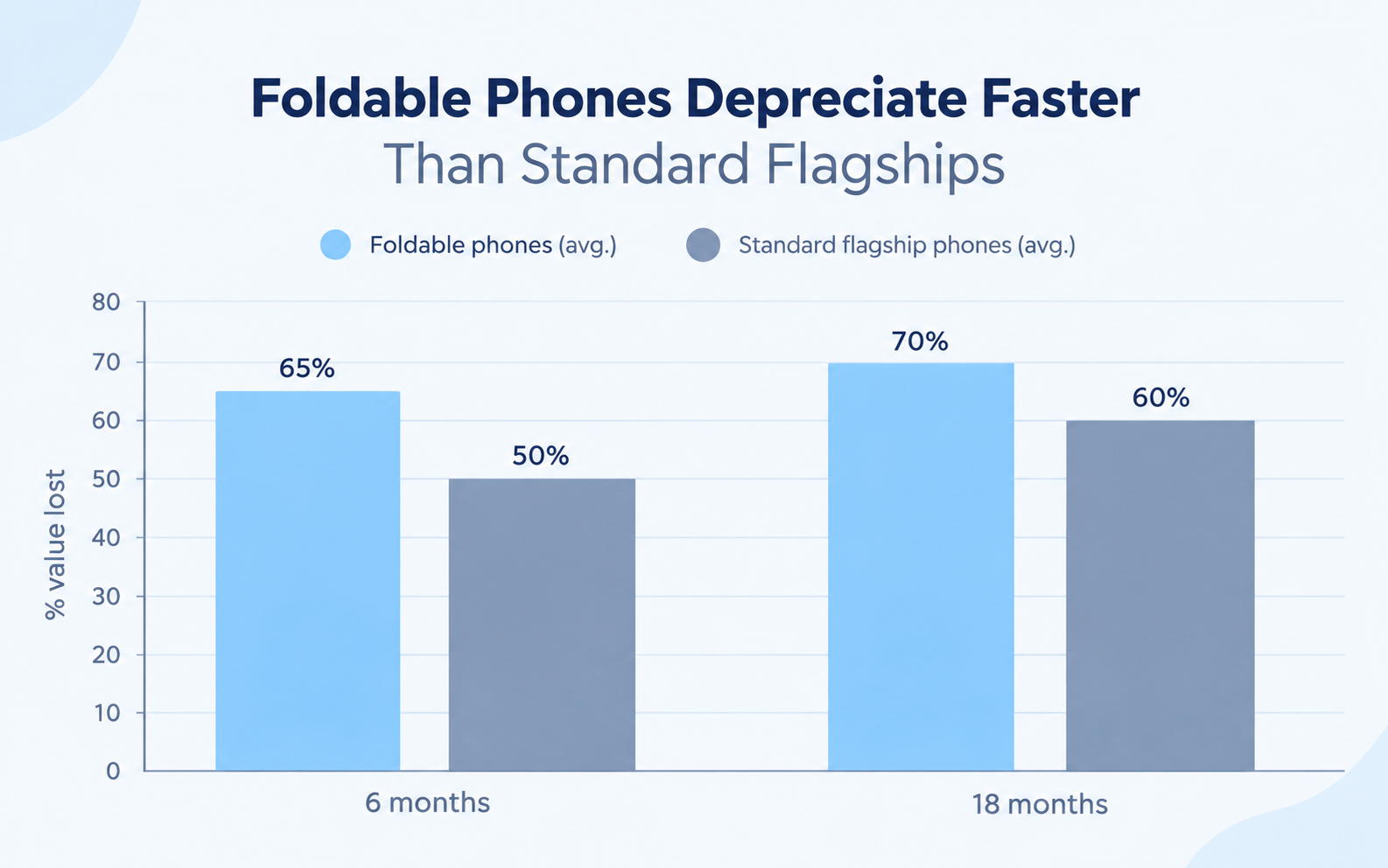
(Note: The figures presented have been rounded off for better understanding and readability for consumers.)
The Galaxy Z Fold and Z Flip series have depreciated by approximately 65% within six months and 70% within one year, while the average iPhone Pro has depreciated by around 40% to 50% over the same periods. Cashmycell's data for the Galaxy Z Fold 6 series also shows that depreciation begins to stabilize after the first few months, although its resale value remains below that of comparable flagship phones.
There are three structural reasons that foldable phones depreciate quickly irrespective of sales numbers:
- Increased risk of use. Consumers are concerned about the degradation of hinges and durability of folding, while replacement of folding screen is considerably more costly compared to ordinary one in case of any damage.
- Reduced secondary market as a consequence. This risk limits the circle of potential buyers of used foldable, decreasing its resale price independently from the success of primary sales of this phone.
- More rapid innovation cycle in the industry. Generations of foldables are typically developed quickly, and last year’s model becomes outdated faster than an annual refresh of the iPhone.
Initial Cashmycell trade-in value assessment for iPhone Duo
The trade-in calculator of Cashmycell has begun providing early estimates for the iPhone Duo ahead of the October 16 pre-order date. Because the device has not yet been delivered, these figures are estimates rather than actual trade-in prices. They nevertheless provide an initial indication of how the 256GB unlocked model could depreciate over time.
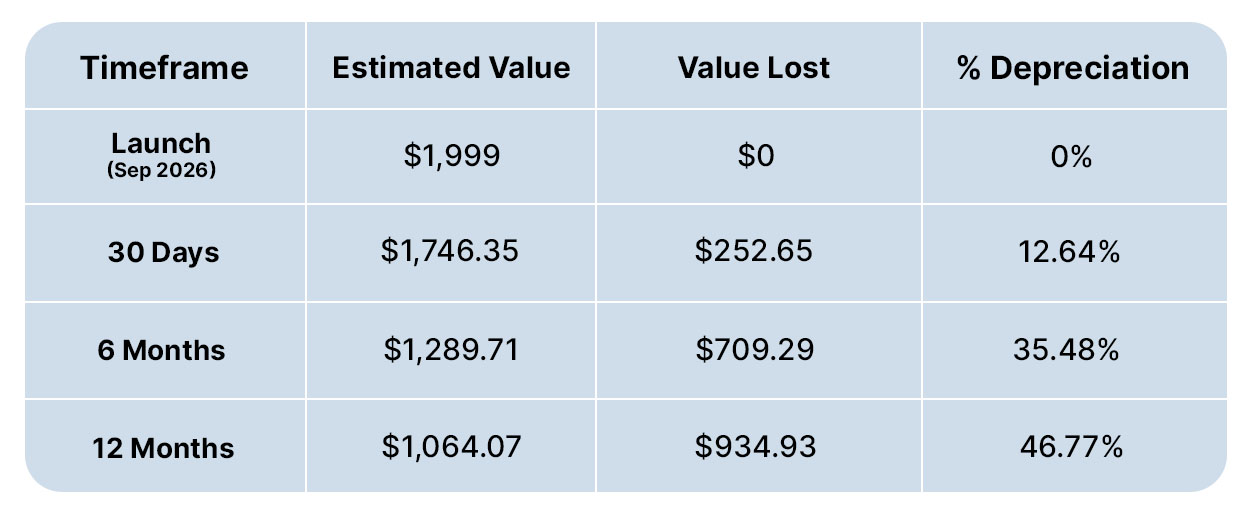
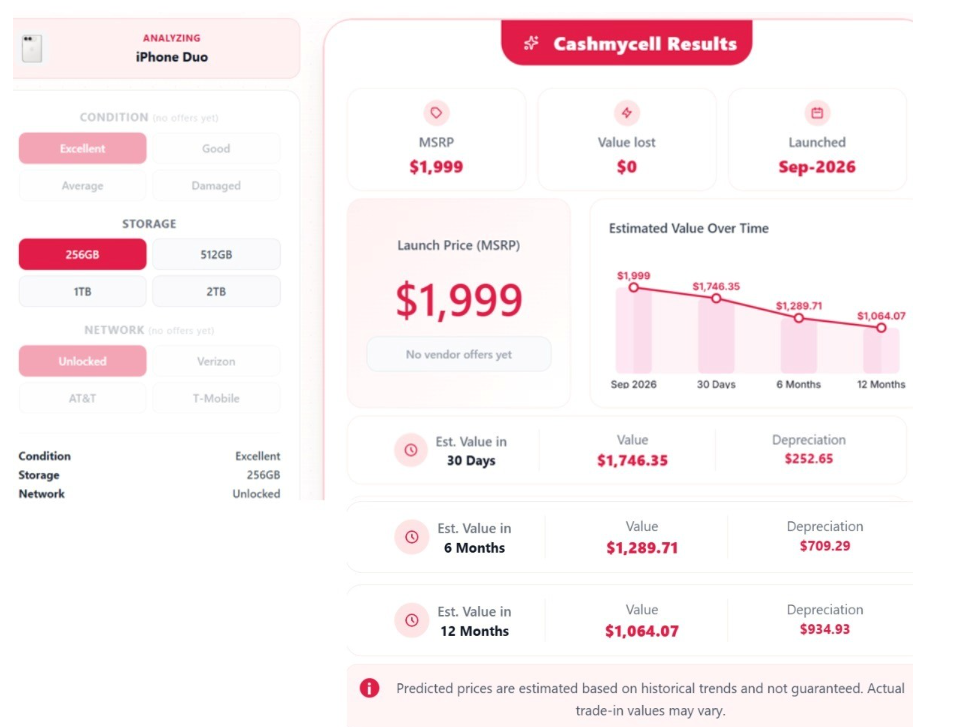
During this initial phase, since there are no vendor quotations available, the estimated depreciation rate for the device stands at 13% after the first month, 35% after six months, and 47% after one year. Over the same periods, the iPhone Pro loses approximately 40%–50%, while Samsung's foldables lose approximately 65% after six months and 70% after one year.
What this means if you're buying or selling an iPhone Duo
The iPhone Duo may not repeat the iPhone Air's specific resale pattern, but its foldable design introduces a different set of depreciation considerations. Historical data suggests that foldable phones generally lose value faster than conventional flagship iPhones, so buyers should not assume that the Duo will retain value at the same rate as an iPhone Pro.
If you're considering trading in an existing iPhone for the Duo, compare your current trade-in value before and after the Duo becomes widely available. Checking the value of your current device before upgrading can help you understand the potential cost of the switch.
Not sure how much your current iPhone is worth? Check Cashmycell's trade-in values.
Methodology
Resale prices and depreciation data for the iPhone Air are sourced from independent analyses of real-time trade-in prices from dozens of U.S. buy-back firms over ten weeks following the product's launch, measured against its original MSRP by storage capacity. Depreciation data comparing foldable and standard flagship phones is based on independent resale-market analysis of devices such as the Samsung Galaxy Z Fold/Flip and Google Pixel Fold against standard flagship phones from the same brands.
The estimated shipments and market share for the iPhone Duo are based on supply-chain analyst forecasts available as of the publication date in September 2026. Because the iPhone Duo had not yet reached retail availability at the time of publication, all Duo trade-in figures presented in this article are estimates rather than observed resale prices, based on available data and historical depreciation patterns for foldable phones.
FAQs
1. What depreciation rate did the iPhone Air really experience?
The iPhone Air depreciated by between 40% and 45%, depending on storage capacity, within ten weeks of its release, averaging 43% overall. This was the highest iPhone depreciation recorded in the period covered by the analysis.
2. Why did the iPhone Air lose value faster than other iPhones?
The Air made several hardware and functionality trade-offs to achieve its thinner design, including a single rear-facing camera, a mono speaker, reported performance-throttling issues, and no wired video output. These differences may have influenced its resale performance.
3. Will the iPhone Duo experience the same depreciation as the iPhone Air?
Not necessarily for the same reasons. The Duo is a new foldable product category for Apple, while the Air's resale performance was associated with a different set of product and functionality considerations. However, the Duo's foldable design introduces its own resale considerations.
4. Do foldable phones depreciate faster than normal iPhones?
Historical resale data indicates that foldable phones can depreciate faster than conventional flagship iPhones. The figures used in this analysis show approximately 60% depreciation for foldables within six months and 70% within eighteen months, compared with around 50% and 60%, respectively, for conventional flagships.
5. How much depreciation did Samsung's Galaxy Z Fold and Z Flip series experience?
The Galaxy Z Fold and Z Flip series have depreciated by approximately 65% within six months and 70% within one year in the data cited in this analysis.
6. Why do foldable phones depreciate faster than ordinary smartphones?
Three factors can contribute to faster depreciation: a smaller pool of used buyers, concerns about hinge durability and screen-replacement costs, and a rapid innovation cycle that can make previous-generation foldables feel outdated sooner.
7. What is the cost of the iPhone Duo?
Starting price for Apple's iPhone Duo with 256GB is $1,999, with 512GB, 1TB, and 2TB versions available up to $3,200.
8. When was the iPhone Duo announced and released?
Apple announced the iPhone Duo on September 9, 2026. Pre-orders begin October 16, 2026, with retail availability starting October 23, 2026.
9. Should I get the iPhone Duo if resale value is my primary consideration?
If resale value is your main concern, factor in the depreciation of a foldable phone, rather than that of the regular iPhone model. It will be more valuable compared to earlier Samsung foldable models but less compared to a regular iPhone Pro.
10. Should I sell my existing iPhone before or after the widespread release of the iPhone Duo?
Compare your current trade-in value before and after the Duo becomes widely available. Trade-in values can change around major product launches, so checking both periods can help you assess the difference before deciding when to sell.