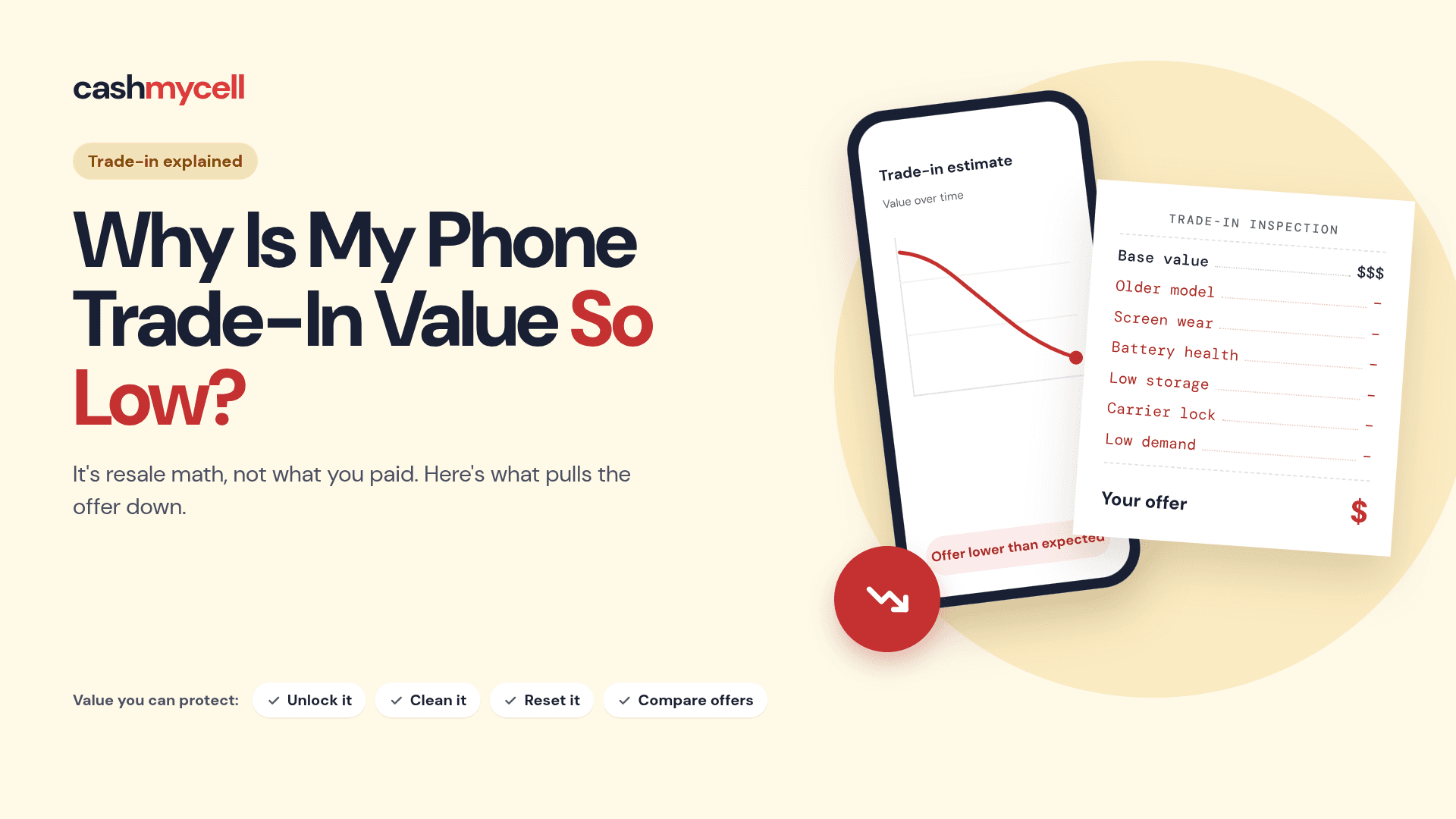
Getting a low offer for your old phone can feel oddly personal, especially if it still works fine and cost a lot when you bought it. But phone trade-in value is based on resale math, not what the device once meant to you or what you originally paid. Most trade-in programs look at condition, model age, market demand, storage, carrier compatibility, and whether the phone can be resold quickly.
If you are wondering why the number looks disappointing, the good news is that many of the reasons are predictable. Once you understand how a trade-in program evaluates a device, you can avoid common mistakes, compare offers more confidently, and decide whether trading in is actually the best move.
Why is my phone trade-in value so low?
Your phone trade-in value may be low because the device is older, damaged, locked to a carrier, short on storage, missing key features, or simply not in high demand anymore. Trade-in offers are usually designed around what the company can recover by refurbishing, reselling, recycling, or using the phone as part of a promotion.
That means a phone can feel valuable to you but still be worth less in a resale system. A device that makes calls, runs apps, and holds a charge may still have scratches, a worn battery, outdated software support, or limited buyer demand. Even small issues can matter because the trade-in company has to account for inspection, repair, shipping, storage, and resale risk.
The phrase “Why is my phone trade-in value so low?” usually comes up when people compare the offer to the original purchase price. Unfortunately, phones depreciate quickly. New models arrive often, discounts change buying behavior, and buyers usually prefer newer devices with longer software life and fresher batteries.
Trade-in value is not the same as resale value
A trade-in offer is not always the highest possible amount your phone could bring. It is usually the easiest amount. You hand over the device, the company checks it, and you receive credit, a gift card, account value, or a promotional discount if the phone qualifies.
Selling the phone yourself may bring more money, but it also takes more effort. You have to create a listing, answer messages, deal with buyers, ship safely, handle payment concerns, and possibly manage returns or complaints. A trade-in program pays less partly because it removes much of that hassle.
Think of the difference this way:
- Trade-in: Faster, simpler, usually lower value, fewer buyer interactions.
- Private sale: More control, potentially higher value, more work and risk.
- Recycling: Best for very old or broken phones, usually little or no cash value.
- Carrier promotion: Can be valuable, but often tied to specific plans, bill credits, or device purchases.
So when a carrier, retailer, or manufacturer gives you a lower quote than expected, it does not always mean the phone is worthless. It may mean the program is pricing convenience, risk, and resale limits into the offer.
Before settling on any single option, compare cash offers on Cashmycell verified buyback stores compete for your phone, so you can see the real market value alongside any carrier or retailer quote.
How do trade-in programs decide what your phone is worth?
Most trade-in programs estimate your phone’s value by looking at the device model, condition, storage capacity, age, demand, activation status, and whether it passes inspection. The quote you see online is usually only an estimate until the phone is physically checked.
A typical evaluation starts with the basics: brand, model, storage size, color, and carrier status. A newer phone with higher storage and broad compatibility usually has a better chance of receiving a stronger offer. From there, condition becomes the big factor.
Screen damage is one of the most obvious value killers, but it is not the only one. Deep scratches, dents, cracked back glass, camera problems, speaker issues, charging port trouble, swollen batteries, water exposure, and weak battery health can all reduce the final amount. Even if the phone turns on, a trade-in team may classify it as damaged if it fails part of the inspection.
Programs also care about whether the phone is ready to be transferred. If it is still attached to an account, reported lost or stolen, under financing, or locked in a way that prevents resale, the offer may drop or disappear altogether. This is why preparation matters before you ship or hand in your device.
The biggest reasons your offer may be lower than expected
Several factors can drag down a phone trade-in value, and more than one may apply at the same time. Here are the most common reasons. To see how much your specific model is actually worth right now, check your phone's value on Cashmycell it pulls live offers so you can benchmark any trade-in quote against real buyer demand.
Your phone is older than the resale market wants
Phones do not age like furniture or collectibles. Once a model is a few generations behind, buyers may worry about battery wear, software updates, camera quality, and performance. Even if your phone feels perfectly usable, the trade-in program is thinking about whether someone else will buy it after refurbishment.
Older models may still qualify for credit, especially during promotions, but their base value often drops as newer devices become available. A phone that was premium at launch can become mid-range in the eyes of the resale market surprisingly fast.
The condition category is stricter than you expected
Many people describe their phone as “good condition” because it works. Trade-in programs may use a stricter definition. A device with a visible crack, dead pixel, damaged camera lens, heavy frame dents, or charging issue can move into a lower condition tier.
Cosmetic wear can matter too. Light scratches may be accepted, but heavy scuffs or deep marks can make resale harder. If the program has to repair or refurbish the phone before selling it, that cost gets reflected in the offer.
Battery health can quietly reduce value
Battery wear is one of the sneakiest reasons a phone loses value. A device may look clean and perform well in short bursts, but a tired battery makes it less appealing to future buyers. If the phone needs a battery replacement before resale, the trade-in value may be adjusted.
This is especially frustrating because battery decline is normal. You did not necessarily do anything wrong. It is simply part of how phones age.
Low storage can make the phone less attractive
A phone with lower storage may receive a smaller offer than the same model with more space. Many buyers want room for photos, videos, apps, and offline downloads. As app sizes and media files grow, entry-level storage options can become less desirable.
This does not mean a lower-storage phone has no value. It just means the market may not reward it as strongly as a higher-capacity version.
The phone may be locked or not fully paid off
Carrier locks, unpaid balances, account restrictions, and activation issues can all affect trade-in eligibility. A phone that cannot be freely activated by a new owner is harder to resell. In some cases, a program may reject it rather than simply reduce the offer.
Before trading in, check whether the phone is paid off and eligible to be unlocked. If you are comparing offers, make sure you understand whether the buyer accepts locked devices or only unlocked ones.
Demand may be lower than you assume
Some models hold value better than others because more people want them used. Popular flagship phones, especially from widely supported brands, tend to have stronger resale demand. Less common models, niche versions, or phones with limited update support may drop faster.
Demand also changes when new phones launch, when retailers run discounts, or when refurbished inventory is already high. A perfectly fine phone can receive a modest offer simply because the market has enough of that model. Demand varies by buyer. A carrier may undervalue your phone while a dedicated buyback store pays more. Compare offers for your iPhone, Samsung, or Google Pixel on Cashmycell to see which buyers want your exact model.
Carrier offers can be confusing
Carrier trade-in deals often mix two different ideas: the phone’s actual trade-in value and the promotional value attached to a new purchase or plan. This is where many people get confused.
For example, a Verizon phone trade in value may look very different depending on whether you are checking a standard trade-in estimate, upgrading through a promotion, adding a new line, changing plans, or buying a specific device. The phone itself may have one base value, while the promotional credit may be higher if you meet certain conditions.
That does not mean the deal is bad. It just means you need to read the structure carefully. Promotional trade-ins may pay out over time as bill credits rather than as an instant lump sum. If you cancel service, change plans, return the new device, or fail to meet the terms, you may not receive the full advertised benefit.
Before you accept any carrier offer, look for:
- Whether the value is instant credit, account credit, gift card, or monthly bill credit.
- How long the credits last.
- Which plans or devices qualify.
- Whether your phone’s condition affects eligibility.
- What happens if the inspected condition differs from your description.
- Whether taxes, fees, or remaining device payments are separate.
This helps you compare the real value instead of focusing only on the biggest number in the promotion.
Can you improve your offer before trading in?
You may be able to improve your trade-in result by cleaning the phone, confirming its condition honestly, unlocking it if eligible, paying off any remaining balance, backing up and resetting it properly, and comparing multiple programs before committing. You may not be able to change the phone’s age or market demand, but you can avoid preventable deductions.
Start with a careful condition check. Look at the screen under bright light, test the cameras, try the speakers, charge the device, check wireless connections, and make sure buttons work. If the trade-in questionnaire asks about cracks, power issues, or screen burn-in, answer honestly. Overstating the condition may get you a higher initial quote, but the final value can drop after inspection.
Then prepare the phone like someone else will own it, because that is the goal. Back up your data, sign out of accounts, remove device locks, erase personal information, and remove accessories unless the program asks for them. A phone that arrives locked or still tied to your account can create delays or rejection.
Use this quick checklist before you trade in:
- Back up everything important. Save photos, contacts, messages, and app data before wiping the device.
- Disable tracking and account locks. Turn off features that prevent another person from activating the phone.
- Sign out of cloud and carrier accounts. Make sure the phone is no longer tied to your personal login.
- Check financing status. Confirm the device is paid off or eligible under the program’s rules.
- Clean the phone gently. Remove dust, case marks, and grime so the condition is easy to inspect.
- Take notes or photos for your records. Document the condition before mailing or handing it in.
- Package it carefully if shipping. Damage in transit can affect the final trade-in value.
- Compare offers. Check carriers, manufacturers, retailers, and reputable resale services when possible. Cashmycell makes this step easy, enter your phone details and instantly see competing cash offers from multiple verified buyers, no account or listing required.
These steps will not turn an older phone into a brand-new flagship, but they can help you avoid losing value for fixable issues.
When a low trade-in still makes sense
A low offer can still be reasonable if convenience matters more than squeezing out every dollar. If your phone is older, slightly damaged, or not worth the time of a private sale, trading it in may be the cleanest option. You avoid meeting strangers, negotiating, creating listings, and worrying about payment issues.
A trade-in can also make sense when it is part of a promotion you already planned to use. If you were going to upgrade with the same carrier anyway, the trade-in credit may reduce your overall cost even if the standalone value looks modest. The key is making sure the promotion fits your actual needs, not changing your plan just to chase a bigger-looking credit.
On the other hand, a private sale may be better if your phone is newer, unlocked, in excellent condition, and in demand. In that case, the extra effort could be worth it. Just be realistic about the time, safety, shipping, fees, and potential buyer issues involved.
Smart ways to compare trade-in options
Do not judge a trade-in program by one number alone. The best offer is the one that gives you the most useful value with terms you can actually live with. A high promotional credit spread across many months may not be better than a smaller instant payment if you dislike long commitments.
When comparing options, ask yourself:
- Is the quoted amount guaranteed or estimated? An estimate can change after inspection.
- How will I receive the value? Cash, credit, gift card, bill credit, and store credit are not equally flexible.
- Is there a time commitment? Monthly credits may require you to keep service active.
- Does my phone qualify in its current condition? A cracked screen or locked device can change everything.
- What is the deadline? Promotional windows and return periods can be strict.
- What happens if the phone is rejected? Know whether it will be returned or recycled.
This is especially important with carrier deals. A Verizon phone trade in value, for instance, may depend on the exact promotion, plan, upgrade status, device purchase, and inspection outcome. Another program might offer less on paper but give you simpler, faster value.
Cashmycell lets you compare all of this in one place, cash offers from verified buyers with clear terms, no bill credits, no plan requirements, and payment typically within 24–48 hours.
A low offer is a signal, not always a dead end
A disappointing trade-in offer does not mean you made a bad purchase or failed to take care of your phone. It usually means the resale market sees the device differently than you do. Age, condition, battery life, storage, lock status, and demand all work together to shape the final number.
If your phone trade-in value is lower than expected, pause before accepting the first quote. Check the condition carefully, prepare the device properly, compare a few options, and read the terms behind any promotion. Sometimes the trade-in is still the easiest and smartest path. Other times, selling privately or keeping the phone as a backup makes more sense.
The best choice is not always the highest advertised number. It is the option that gives you fair value, minimal hassle, and no surprises after you hand over the device.