
For years, switching from Android to an iPhone felt like moving to another country. Contacts disappeared, chats broke, apps had to be rebuilt from scratch, and the learning curve discouraged even curious users.
That argument has become increasingly outdated.
The smartphone industry has changed dramatically since those fears first emerged. Device replacement cycles are stretching close to four years, premium smartphones are expected to last longer, and both Apple and Google have invested heavily in making migration less painful. Today's competition is less about locking users in and more about earning long-term loyalty.
Moving your data is no longer the nightmare it once was
Android still commands the majority of the global smartphone market, according to StatCounter. Yet Apple's installed base has quietly reached a milestone: roughly one in four active smartphones worldwide is now an iPhone, according to Counterpoint Research. That growth hasn't happened because people stopped switching. It's happened because switching has become significantly easier.
Android remains the world's dominant mobile operating system, accounting for roughly three-quarters of the global smartphone installed base, while Apple's iOS powers the remaining quarter. This broad market reach means Android privacy decisions, such as changes to Samsung Health can potentially affect far more users worldwide than platform-specific policy updates.
Here's what Apple's official Move to iOS tool can transfer when switching from an Android device to an iPhone, helping users keep most of their everyday data intact. ( Source: Apple Support – Move from Android to iPhone or iPad )
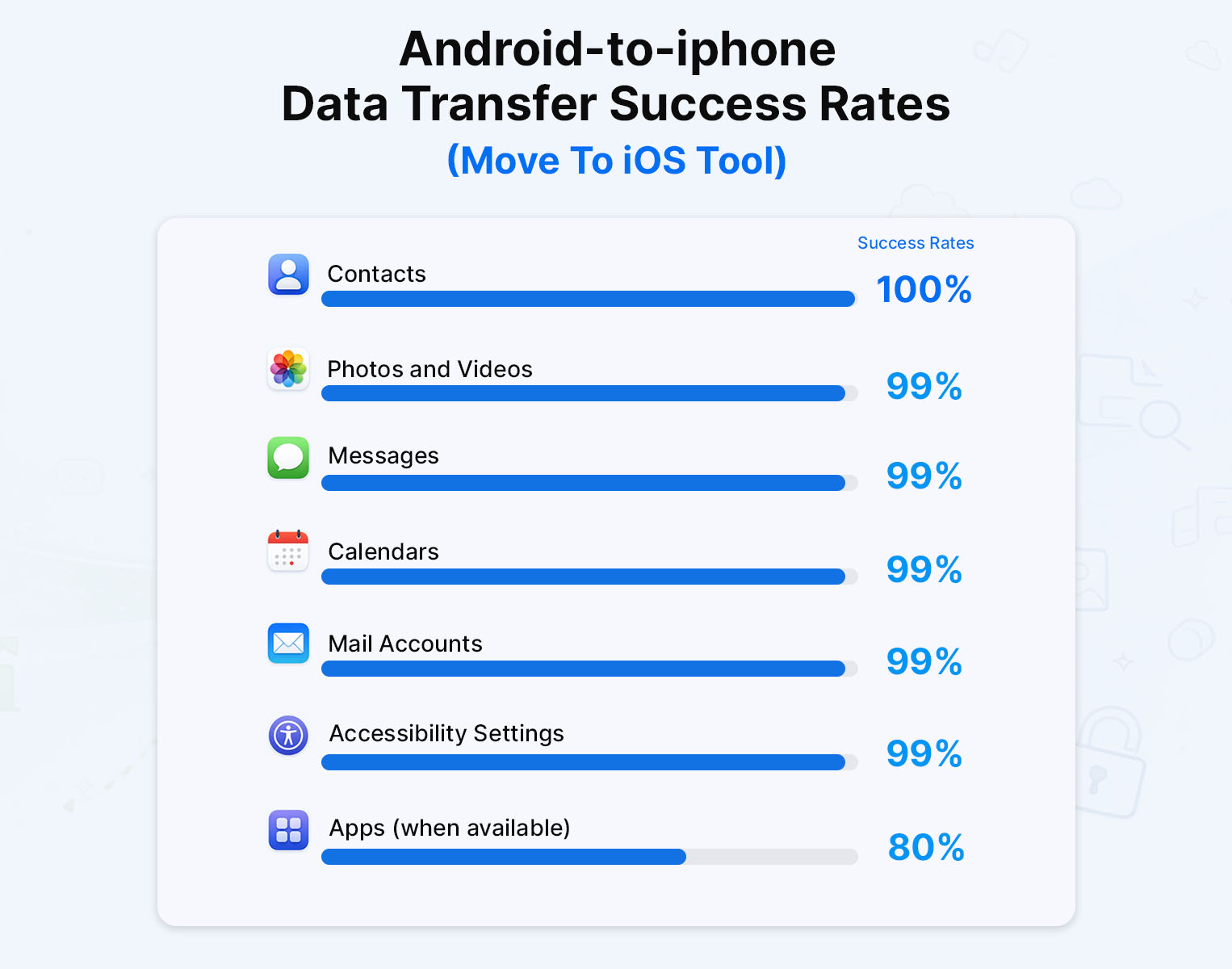
Password migration has also improved through industry collaboration, while WhatsApp officially supports chat migration between Android and iPhone. Apple and Google have continued expanding interoperability rather than treating migration as an afterthought.
Most major services including WhatsApp, Gmail, Microsoft 365, Netflix, Spotify, and Google apps are fully supported on iOS. As a result, the conversation has shifted from app availability to app quality, with many developers still optimizing for iOS first because Apple's more standardized hardware ecosystem is easier to support consistently.
Assumptions that no longer apply
Long-term software support can make switching feel like a safer investment. One reason some Android users hesitate to move to an iPhone is the concern that the higher upfront cost may not be worth it. However, as consumers keep their phones for longer, replacement cycles are now approaching four years, according to Counterpoint Research the length of software support becomes increasingly important. Apple has historically provided major iOS updates for around six to seven years, while Samsung and Google have extended support on many flagship devices, narrowing the gap. For buyers considering a switch, longer software support means the device is likely to remain secure, compatible with new features, and usable for years, reducing the need for frequent upgrades.
One of the most common assumptions about switching to an iPhone is that it means leaving Google's ecosystem behind. In reality, that's rarely the case. Apps like Gmail, Google Photos, Chrome, Maps, Drive, Calendar, YouTube, Gemini, and Google Workspace work seamlessly on iOS. For most people, the biggest change is the phone they're using, not the apps and services they rely on every day.
The hesitation is understandable, but increasingly outdated
The fear of switching once reflected genuine technical limitations. In 2026, it mostly reflects memories of an older smartphone market.
Data migration is simpler. App availability is nearly universal. Software support lasts longer than ever, and stronger resale values reduce the total cost of ownership. Android remains the right choice for millions of users, particularly those who value customization and hardware diversity. But for anyone considering an iPhone, the biggest obstacle today is unlikely to be the platform itself.