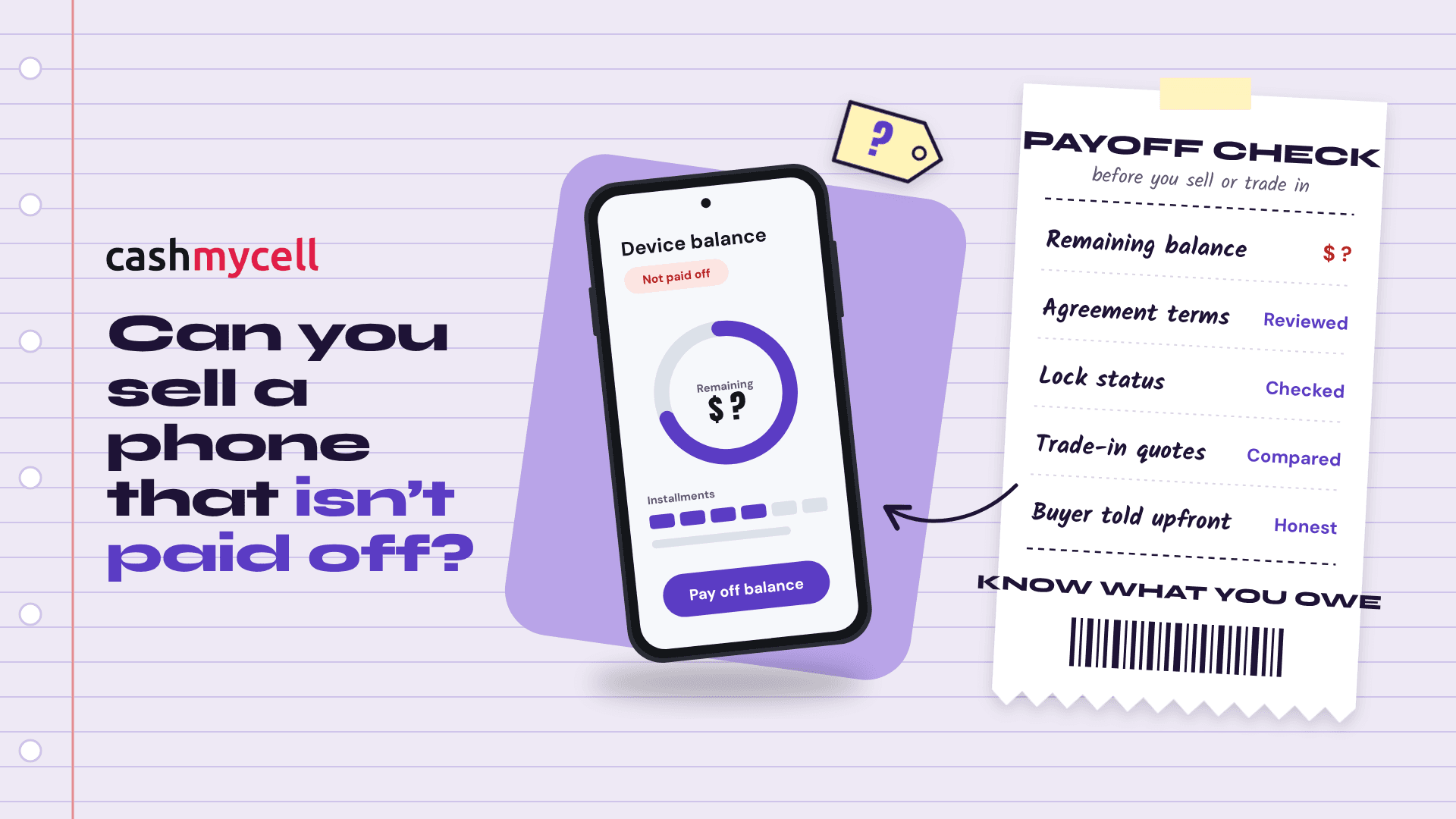
Can you sell or trade in a phone that isn't paid off? In many cases, yes—but whether you should depends on your financing agreement, the phone’s remaining balance, and the rules of the buyer, carrier, or trade-in program. A financed phone is not automatically impossible to sell, but it can create complications if the balance is ignored.
Before you hand over your device, it helps to understand what you still owe, whether the phone is locked, and how different phone trade-in options treat unpaid balances. A little homework can protect your money, your account, and the person receiving the phone.
Can you sell or trade in a phone that isn't paid off?
Yes, you may be able to sell or trade in a phone that is not paid off, but the unpaid balance usually remains your responsibility. The key point is that selling the physical phone does not automatically erase the payment plan, installment agreement, lease, or financing contract attached to your account.
That means you could trade in or sell the device and still keep getting billed for it. If you stop paying, the carrier or lender may take action under the terms of your agreement. Depending on the situation, that could include blocking the device from a network, affecting your account standing, or sending the unpaid amount to collections.
This is why the real question is not only “Can I sell it?” but “What happens after I sell it?” A clean, transparent transaction is always better than rushing to get rid of a phone and discovering later that the balance followed you.
What “not paid off” actually means
A phone that is not paid off is usually tied to one of a few common arrangements. You might be on a carrier installment plan, a promotional device credit agreement, a lease-style upgrade program, or third-party financing. In each case, you have possession of the phone, but you still owe money under a contract.
Sometimes the phone may also be locked to a specific carrier until certain requirements are met. A locked phone can have a lower trade-in value or be harder to sell privately because the next owner may not be able to use it with their preferred service provider. Even if the device itself is in great condition, account restrictions can make it less attractive.
There is also a difference between owing money on a phone and having a phone reported as lost, stolen, or blocked. A financed phone with an active balance is not necessarily blacklisted. But if payments stop or the account falls into serious delinquency, the phone’s status may change depending on the carrier or financing terms.
Why the payoff balance matters
The payoff balance is the amount you would need to pay to fully own the device free of that financing obligation. Knowing this number helps you make a practical decision. If the phone is worth more than the remaining balance, selling or trading it in may still make sense. If you owe more than the phone is worth, you may need to decide whether convenience is worth the extra cost.
For example, a phone might have a strong trade-in value because it is a recent model in good condition. But if your remaining balance is higher than the offer, the transaction may not actually put money in your pocket. You could receive credit from a phone trade-in while still owing the carrier separately.
This is especially important with promotional deals. Some offers spread monthly credits across a set period. If you pay off or trade in the phone early, you may lose future credits or trigger a remaining balance. Always check the terms before assuming a promotion has covered the full cost.
Common phone trade-in options
There is no single path for getting value from a financed phone. Your best choice depends on your goal: upgrading quickly, getting cash, reducing hassle, or avoiding risk.
Carrier trade-in programs
Carrier programs are often the simplest option if you are upgrading with the same provider. They may let you apply the phone trade-in toward a new device, bill credits, or an upgrade offer. The convenience can be appealing because the carrier can usually see your account status and explain what happens to your remaining balance.
The downside is that the offer may come with conditions. You may need to stay on a certain plan, keep service active, or accept credits over time rather than receiving instant cash. If your phone is not paid off, the carrier may require you to pay the remaining balance first, or it may roll certain costs into the upgrade process depending on the program.
Manufacturer trade-in programs
Phone manufacturers may accept trade-ins directly when you buy a new device. These programs can be straightforward, but they usually focus on the phone’s model, condition, and eligibility rather than your personal financing situation. If you still owe your carrier or lender, that balance may remain separate.
This option can work well when you want a new unlocked phone or prefer buying directly from the brand. Just make sure the old phone meets the program’s requirements and that trading it in will not violate any agreement connected to your current payment plan.
Third-party buyback sites
Third-party buyback companies may offer quick quotes and prepaid shipping. They can be useful if you want a simple sale without meeting a private buyer. However, they may reduce the offer if the phone is locked, financed, damaged, or not as described.
Read the terms carefully before sending the device. Some services ask whether the phone is fully paid off or eligible for activation. If the answer is no, the offer may change, or the company may reject the phone.
Private sale marketplaces
A private sale can sometimes bring a higher price than a trade-in, especially if the device is popular and in excellent condition. But it also requires the most transparency. You should never hide the fact that a phone has an unpaid balance, is carrier-locked, or may have activation limitations.
A buyer wants a device they can use without surprises. If the phone becomes blocked later because payments stopped, the buyer may have little patience for explanations. Being upfront protects both sides and reduces the chance of disputes.
A practical checklist before you sell or trade in
Before accepting any offer, take a few minutes to confirm the basics. This checklist can help you avoid the most common mistakes:
- Check your remaining balance. Log in to your carrier or financing account and confirm the exact payoff amount.
- Review your agreement. Look for early payoff rules, upgrade terms, promotional credits, and trade-in restrictions.
- Confirm lock status. Find out whether the phone is carrier-locked and what is required to unlock it.
- Check device condition. Screen damage, battery issues, missing buttons, or water damage can reduce the trade-in value.
- Back up your data. Save photos, contacts, messages, and app data before wiping the phone.
- Remove accounts and security locks. Sign out of cloud accounts and disable activation locks so the next user can set up the device.
- Factory reset the phone. Erase personal data only after your backup is complete.
- Be honest about financing. If selling privately, disclose anything that could affect activation or use.
- Save proof of the transaction. Keep receipts, quotes, shipping records, and buyer messages.
These steps are simple, but they matter. Most problems happen when someone assumes the phone is “basically theirs” without checking the contract attached to it.
How unpaid balances can affect trade-in value
A phone’s trade-in value is usually based on model, storage size, condition, age, and demand. But unpaid financing can still affect the practical value of the device. A buyer or trade-in company may see the phone as riskier if it cannot be unlocked, activated freely, or guaranteed to remain in good standing.
Condition also plays a major role. A fully paid-off phone with a cracked screen may be worth less than a financed phone in excellent physical shape, depending on the program. Still, a clean ownership status often makes the process easier.
Think of trade-in value in two layers. The first layer is the device itself: how new it is, how well it works, and whether it has damage. The second layer is the account status: whether it is paid off, unlocked, and free of restrictions. The strongest offers usually come when both layers look good.
Should you pay off the phone first?
Paying off the phone first is often the cleanest option because it removes uncertainty. Once the balance is cleared, you may be able to unlock the device, provide a cleaner sale, and compare more phone trade-in options without worrying about account complications.
That does not mean it is always the best financial move. If the payoff amount is high and the trade-in offer is low, paying it off just to trade it in may not feel worthwhile. You might choose to keep using the phone longer, wait until the balance drops, or look for an upgrade program that handles the remaining obligation in a way you understand.
The safest approach is to compare the numbers before deciding:
- Write down the remaining balance.
- Get trade-in quotes from more than one source.
- Check whether you would lose any promotional credits.
- Confirm whether the phone can be unlocked after payoff.
- Compare the net result, not just the headline offer.
A large trade-in offer can look exciting, but the real value is what remains after payoff requirements, lost credits, fees, or new plan commitments.
Tips for a smoother phone trade-in
If you decide to move forward, treat the process like a small financial transaction, not just a gadget swap. Start by getting everything in writing. Online quotes, carrier chat transcripts, email confirmations, and receipts can be helpful if the offer changes or there is a dispute later.
Package the phone carefully if you are mailing it. Take photos of the device from multiple angles before shipping, including the screen, back, sides, and any existing damage. If the phone is lost or the condition is questioned, documentation can make the conversation easier.
For private sales, meet in a safe public place when possible and use a payment method you trust. Give the buyer accurate information about the model, storage, carrier status, and financing situation. If you plan to pay off the balance immediately after the sale, say so clearly and follow through.
Also remember that your personal data is worth protecting. Removing your SIM card, wiping the device, and signing out of linked accounts should be non-negotiable. A good deal is not worth exposing private photos, messages, passwords, or payment information.
The bottom line
You can often sell or trade in a phone that is not paid off, but the balance does not disappear just because the device changes hands. The smartest move is to check your payoff amount, understand your agreement, compare realistic offers, and be transparent with any buyer or trade-in provider.
If you want the simplest path, paying off the phone first usually creates fewer complications. If you want the fastest path, a carrier or manufacturer program may be convenient, as long as you understand the terms. Either way, a careful phone trade-in starts with one rule: know what you owe before you decide what the phone is worth.