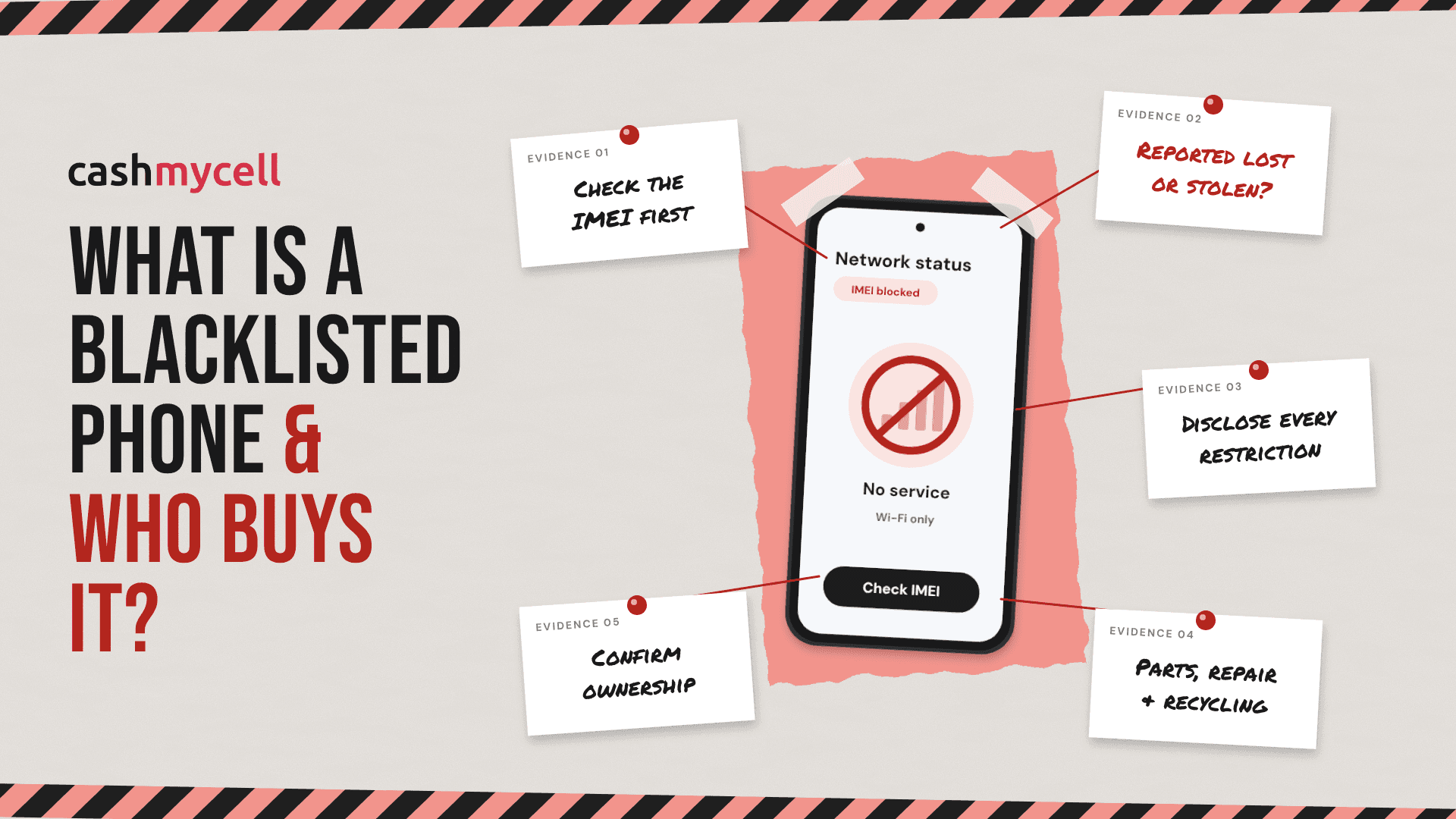
A blacklisted phone is a mobile device that has been flagged in an IMEI database, usually because it was reported lost, stolen, or connected to certain account issues. This guide explains blacklisted phones: what they are and who buys them, how phone restrictions affect everyday use, and what to do before selling or buying one. It also answers the common question, does ecoATM take blacklisted phones, using current public information from ecoATM and industry sources.
What does it mean when a phone is blacklisted?
A phone is blacklisted when its unique device identifier, usually the IMEI or MEID, is added to a database that carriers and resale businesses can check. Once that happens, the device may be blocked from activating on participating cellular networks, even if the hardware still turns on, connects to Wi-Fi, and appears functional. CTIA’s Stolen Phone Checker is one tool designed to help consumers and law enforcement identify devices reported as lost or stolen. (stolenphonechecker.org)
This is different from a cracked screen, weak battery, or old model. Those problems affect condition and value, but a blacklist affects the phone’s network eligibility. In practical terms, a blacklisted phone might work like a small tablet on Wi-Fi but fail when someone tries to add a SIM or activate cellular service.
Blacklisting is most often associated with theft prevention. The FCC advises people who have a stolen device to report it to both their wireless provider and police, including device details such as the IMEI or serial number when available. (docs.fcc.gov) That report can lead to phone restrictions that follow the device, not just the original owner’s account.
Common reasons phones get restricted
Not every restricted phone has the same story. Some issues are serious red flags, while others come from account or setup problems that may be fixable by the rightful owner.
Common reasons include:
- Reported lost or stolen: The original owner or carrier flags the device to prevent resale or unauthorized use.
- Unpaid financing or account obligations: Some resale programs will not accept phones tied to unpaid balances or financing agreements.
- Insurance claims: A phone replaced through an insurance claim may later be restricted if the original device reappears.
- Carrier lock: This is not always the same as blacklisting. A locked phone may be limited to one carrier but not reported lost or stolen.
- Activation lock or account lock: Apple ID, Google account, or similar locks can prevent setup, even if the IMEI itself is not blacklisted.
The key point is that “blacklisted” should not be used as a catch-all for every phone problem. A carrier-locked phone, an iCloud-locked phone, and a blacklisted phone can create similar frustration for a buyer, but they are different issues with different solutions.
Who buys blacklisted phones?
Some buyers purchase blacklisted phones, but legitimate buyers usually do so only for limited purposes such as parts, repair training, recycling, or non-cellular use. A blacklisted phone generally has less resale value because normal activation may not work, and ethical buyers expect the seller to disclose the restriction before any sale.
The most common buyers are parts harvesters, repair shops, electronics recyclers, and experienced resellers who understand the risk. They may want the screen, camera modules, housing, battery, buttons, or internal components. In those cases, the value depends less on carrier activation and more on model, condition, demand for parts, and whether the device is legally owned.
Private buyers sometimes purchase blacklisted phones unknowingly through online marketplaces. That is where problems happen. A phone may look clean in photos, power on normally, and still fail activation later. If you are buying used, always check the IMEI before payment and avoid sellers who refuse to provide enough information for verification.
The legal and ethical side of selling a restricted phone
Selling a phone you do not own, hiding a lost-or-stolen status, or misrepresenting a device as fully usable can create serious problems. Even when the phone is yours, disclosure matters. A buyer should know whether the device can be activated, whether it has account locks, and whether it is still tied to financing.
If your own phone was blacklisted by mistake, start with the carrier or company that placed the restriction. Marketplaces and kiosks usually cannot remove a blacklist for you. The party that reported or flagged the device is typically the one that must correct the record.
Before selling any used phone, take these steps:
- Confirm ownership. Do not sell a phone that belongs to another person, employer, school, or carrier program.
- Check the IMEI or MEID. Use a reputable checker or ask the carrier to confirm status.
- Remove personal accounts. Sign out of Apple ID, Google, Samsung, or manufacturer accounts.
- Erase your data. Back up what you need, then factory reset the device.
- Disclose restrictions clearly. If it is blacklisted, locked, financed, or parts-only, say so in writing.
- Keep records. Save receipts, messages, and proof of ownership in case questions come up later.
These steps protect both sides. They also help prevent a used phone from becoming a dispute, return, or fraud claim.
Does ecoATM take blacklisted phones?
According to ecoATM’s own public guidance, ecoATM does not accept blacklisted phones, including phones reported lost or stolen and certain phones associated with unpaid bills. ecoATM also says it cannot accept a device if you still owe money on a financed phone, and its process includes security measures used to verify devices submitted at kiosks. (blog.ecoatm.com)
So the short answer to does ecoATM take blacklisted phones is no, not as a normal accepted trade-in. If you are unsure about your device, check its status before visiting a kiosk. You should also remove activation locks and confirm that the phone is yours to sell.
ecoATM’s public materials say sellers can use kiosks to trade in old or unused devices and receive payment if the device is accepted, but acceptance depends on the device and the company’s review process. (locations.ecoatm.com) A phone that looks physically fine may still be rejected if its status, ownership, financing, or lock condition does not meet requirements.
What blacklisting means for value
Blacklisted phones usually sell for less than clean phones because the buyer pool is smaller. A clean phone can appeal to everyday users who want to activate service. A restricted phone appeals mostly to buyers who know how to reuse components, recycle materials, or use it without cellular service.
Value depends on several practical factors:
- Model and age: Newer flagship phones often have more valuable parts than older budget models.
- Physical condition: A working display, cameras, and frame may still matter even if service is blocked.
- Battery health: Buyers may discount phones with swollen, weak, or unsafe batteries.
- Lock status: Activation lock can reduce value further because it limits testing and reuse.
- Proof of ownership: Documentation makes a legitimate sale easier and safer.
A blacklisted phone should never be priced or described like a fully functional used phone. If it cannot make calls on a carrier network, that limitation belongs in the first few lines of the listing, not hidden at the end.
How to protect yourself when buying a used phone
Buying secondhand can be smart, but only if you verify the phone before money changes hands. Photos and a low price are not enough. Ask for the IMEI, confirm that the device is not reported lost or stolen, and meet in a place where you can test the phone safely.
Use this quick checklist:
- Ask the seller for the IMEI or MEID before meeting.
- Run a blacklist or stolen phone check through a reputable source.
- Confirm the phone is not activation locked.
- Insert your SIM or activate eSIM only after verifying the device is eligible.
- Avoid “too good to be true” deals, rushed sellers, and vague explanations.
- Get a written receipt or marketplace record showing what was sold.
If a seller says, “It just needs to be unlocked,” ask what kind of unlock they mean. Carrier unlock, activation unlock, and blacklist removal are not the same thing. A legitimate carrier unlock will not necessarily fix a device reported lost or stolen.
Better options if your phone is restricted
If the phone is yours and the restriction seems wrong, contact your carrier first. Provide proof of purchase, account information, or any documents showing that the device was not stolen and is no longer tied to a claim or unpaid obligation. If the device was found, return it to the owner, carrier, or local authorities rather than trying to sell it.
If the restriction is valid and cannot be removed, consider responsible recycling or selling it only as parts with full disclosure. Many components still have reuse value, and recycling keeps electronics out of the waste stream. The important part is transparency: describe the phone accurately, avoid promising activation, and choose buyers who understand restricted devices.
Check what your blacklisted or damaged phone is still worth.
Final takeaway
Blacklisted phones are restricted devices that may power on but fail cellular activation because of their IMEI status. Some buyers purchase them for parts, repair, or recycling, but legitimate resale depends on ownership, disclosure, and realistic expectations. Before buying or selling, check the IMEI, understand the phone restrictions, and remember that ecoATM’s public guidance says blacklisted phones are not accepted.