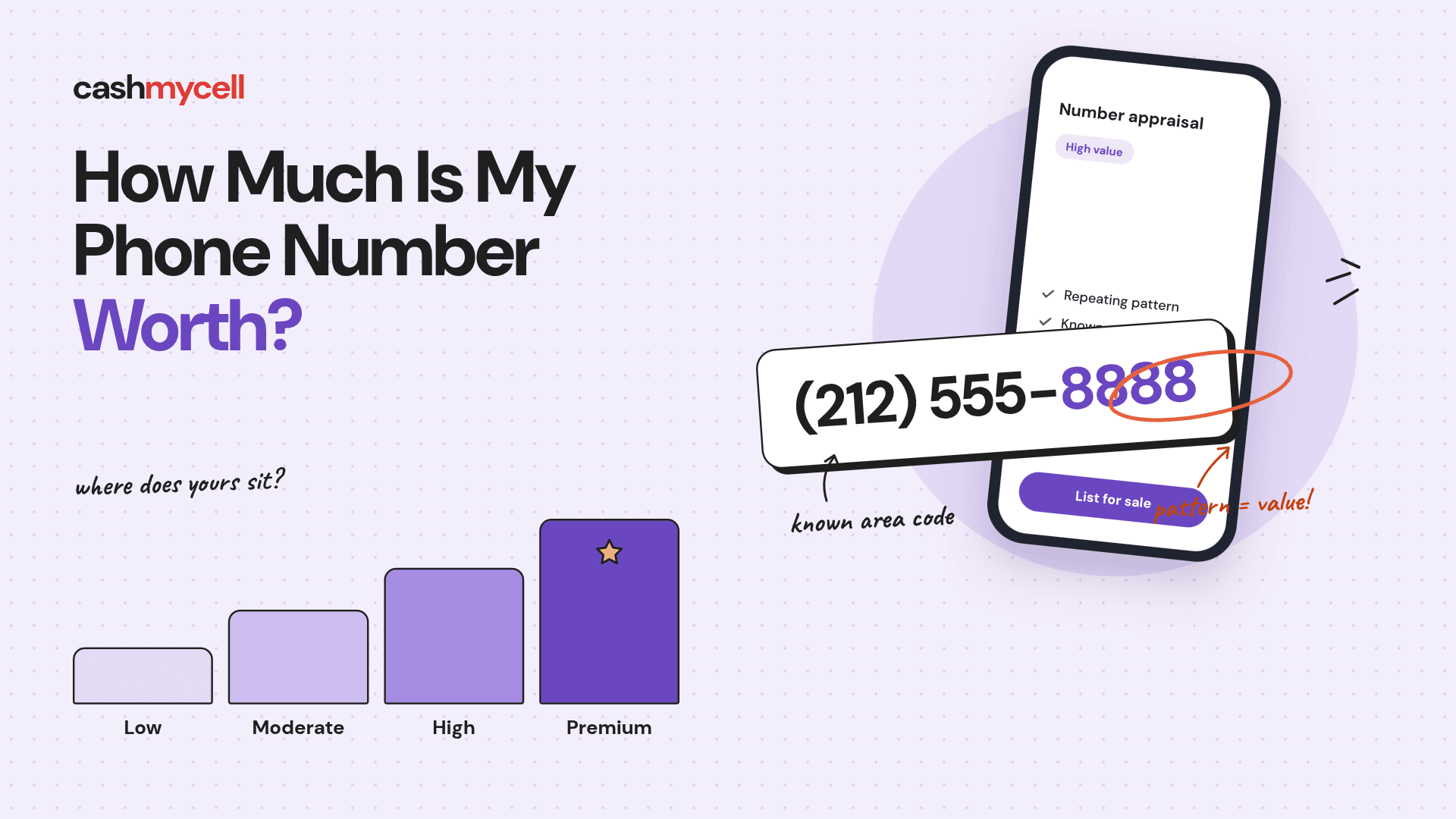
A phone number can be more than contact info. In the right case, it can be a small digital asset: easy to remember, good for branding, easy to share, and useful to someone who wants a number that stands out. If you have ever asked how much is my phone number worth, the answer depends less on how long you have had it and more on pattern, area code, recall, and buyer demand.
The phone number market is small, but real. Individuals, entrepreneurs, and companies buy, sell, license, park, and transfer numbers through niche marketplaces, often by porting the number from one carrier to another. Platforms such as NumberBarn describe their marketplace as a place where users can list numbers they own for sale or license, and where buyers can buy numbers and port them to another carrier if the receiving carrier accepts the port. (help.numberbarn.com)
How much is my phone number worth?
Your phone number is worth what a motivated buyer will pay for it, and that value usually comes from recall. A random number with no clear pattern may have little resale value, while a number with a well-known area code, repeated digits, a clean rhythm, or a word-like vanity spelling may draw more interest.
The most important thing to understand is that phone number value is not sentimental value. The fact that you have used a number for years, received many calls on it, or attach personal memories to it does not automatically make it valuable to a buyer. Buyers pay for numbers to seem credible, be memorable, aid advertising, or match a brand.
A simple way to think about value is to ask whether someone could remember the number after seeing it once. If the answer is yes, it may be worth a closer look. If the number is hard to say, easy to mistype, or has no clear structure, it may still help you, but it is unlikely to bring much in a phone number sale.
The traits that create phone number value
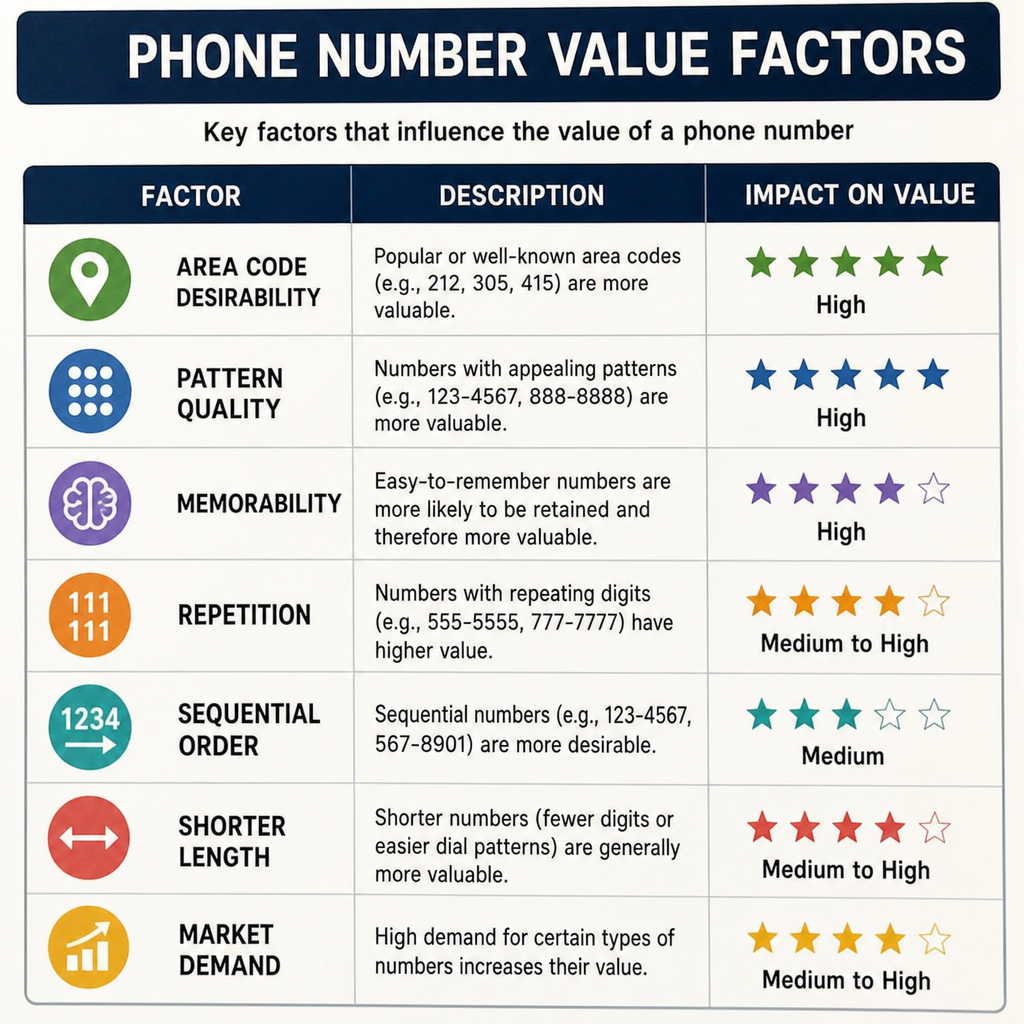
A number becomes valuable when it lowers friction. Customers remember it faster, sales teams say it more easily, and ads become cleaner because the contact point sticks. That is why the best numbers often share a few practical traits.
Memorable digit patterns
Patterns are one of the clearest drivers of value. Repeating digits, short runs, mirrored pairs, and clean endings are easier for the brain to store. The last four digits matter a lot because people often remember a phone number by its end.
For example, a number ending in 0000, 1212, 1234, 7777, or 2020 is usually more memorable than one ending in 5849. Not every pattern is premium, but patterns reduce mental effort, and less effort is what buyers want.
Common pattern signals include:
- Quad repeats: four of the same digit, such as 8888 or 2222.
- Sequences: simple runs such as 1234 or 4321.
- Pairs: endings like 4455, 7788, or 1212.
- Mirrors: structures that repeat or reflect, such as 1221.
- Round numbers: endings like 0000, 1000, or 9000.
A number does not need to be perfect to have value. A strong ending can make an average number more appealing, especially if the area code is also strong.
Area code recognition
Area code matters because it signals place, identity, and trust. Older or well-known metro area codes can feel more established than newer overlays. For a local business, a known local code can build trust because customers instantly see the service area.
A business in New York may prefer an area code from Manhattan. On the other hand, a company in the Bay Area may like a number from San Francisco or Silicon Valley.
Source In smaller markets, using a local number is more helpful than a similar out-of-area number.
Area code value is also audience-specific. A number that's good for a local contractor may not matter much to a national ecommerce brand. That is why valuation is not only about rarity; it is about fit.
Vanity words and brand fit
Vanity numbers turn digits into words, phrases, or easy links. A number that spells a service, brand name, benefit, or call to action can be valuable because it supports marketing. Businesses prefer memorable numbers on billboards, radio, vehicles, podcasts, or search results for advertising.
A vanity number does not have to spell a full word to help. It might include initials, a short brand cue, or a short phrase. What matters is whether the number makes the business easier to contact and easier to recall.
Easy to say
Some numbers look fine on a screen but are awkward when spoken aloud. A valuable number should be easy to say, hear, and repeat. This is especially important for service businesses, call centers, medical offices, legal practices, real estate teams, and any company that relies on phone inquiries.
If a number makes people ask whether it was five or nine, or ask for the last four digits again, its value drops. Clean sound matters because phone numbers often travel by voice.
Can I sell my phone number?
Yes, in many cases you can sell your cell phone number through a marketplace if you control the active number and can transfer it. The usual process is to port the number to a platform that supports listing, sale, licensing, and transfer, not just hand over a SIM card or carrier login.
Porting is the industry term for moving a number from one service provider to another. The FCC describes local number porting as the ability to keep a phone number when changing carriers in the same local area, and marketplace rules often use porting as the transfer step. (wireless.fcc.gov)
Before selling a phone number, make sure it's active, under your control, and not linked to any issues. If it belongs to an employer, client, dissolved business, shared family plan, franchise, or regulated service account, slow down and sort out rights first.
A practical selling path
The exact steps vary by platform, but the general process is straightforward:
- Evaluate the number. Look at the area code, final four digits, repeat patterns, spelling potential, and likely buyer type.
- Remove personal risk. Update 2FA, bank accounts, email recovery, medical portals, and business listings before transferring the number.
- Choose a marketplace or broker. Specialized platforms may allow sale, licensing, or parking.
- Port the number. Move the number from your current provider to the marketplace or holding provider if required.
- Set a realistic price. Compare similar listings, but remember that asking prices are not the same as completed sales.
- Respond to offers carefully. A niche buyer may care deeply about your exact number, while most buyers will not.
- Complete transfer only through a safe process. Use a platform that handles payment, verification, and porting instructions.
NumberBarn's materials explain how users can transfer, list, and earn money from their phone numbers. (numberbarn.com)
Selling is not instant
A number can be valuable and still take time to sell. The buyer pool is narrow because most people do not need your exact digits. Premium numbers are often bought by businesses, marketers, collectors, or people who want a specific area code or pattern.
That means patience matters. A fast sale may require a lower price, while a higher asking price may require waiting for the right buyer. If the number has ongoing monthly costs while parked or listed, factor those costs into your decision.
What affects a business phone number's worth?
If you are asking how much is my business phone number worth, the answer depends on both the number itself and the business around it. A strong business number can be worth more than a personal one because it may support leads, ads, recall, and brand value.
However, business numbers also carry more risk. Old numbers on ads, invoices, trucks, or contracts can confuse customers or create liability issues. A buyer wants the number, not your obligations, complaints, customer relationships, or abandoned service expectations.
For a business number, evaluate three layers:
- Intrinsic number quality: area code, pattern, vanity spelling, and recall.
- Commercial fit: whether the number matches an industry, city, service, or brand phrase.
- Legacy exposure: where the number has appeared and what callers may expect when they dial it.
A memorable number is valuable for businesses like plumbers, dentists, law firms, taxis, restaurants, and home services. It helps reduce missed calls and aids in advertising. But if the number is tied to an active brand, selling it without a transition plan can create customer confusion.
Business risk checklist before transfer
Before listing a business number, review the practical cleanup work:
- Update website contact pages, Google Business Profile, social profiles, email signatures, and printed materials.
- Notify important customers, vendors, and partners of the new number.
- Remove the number from bank, payroll, tax, insurance, and software accounts.
- Check whether the number appears in contracts, franchise materials, licenses, or regulated communications.
- Decide whether you need a transition period with call forwarding or voicemail.
- Avoid promising that old customer traffic or lead flow will continue after transfer unless that is clearly part of a written agreement.
A phone number sale should transfer the number cleanly, not create confusion about who owns the business relationship.
Pricing your number without overrating it
Most owners overrate their numbers at first. That is fair: if you have used a number for years, it feels personal. Buyers, however, compare your number against alternatives.
Start by placing the number into a rough tier:
| Tier | Typical traits | Likely buyer interest |
| Low value | Random digits, normal area code, no pattern | Little interest beyond personal use |
| Moderate value | Good local area code, one memorable piece, clean rhythm | Local buyers or individuals may care |
| High value | Strong pattern, known area code, easy to say | Businesses, marketers, or collectors may show interest |
| Premium value | Rare pattern, vanity word, famous area code, strong brand fit | Niche buyers may pay much more |
This table is a guide, not an appraisal. The same number can look average to one buyer and perfect to another. - A contractor may prefer a matching number.
- A collector likes repeating digits.
- A local brand values the area code.
When estimating price, compare active marketplace listings but stay skeptical.
Listed prices show what sellers hope to get, not what buyers have paid.
If a marketplace offers an appraisal tool, use it as a starting point, not a promise.
NumberBarn notes that its appraisal is an estimate of what a seller can reasonably expect in its marketplace, which reinforces the idea that value depends on the platform and the buyer. (numberbarn.com)
Sale, licensing, and parking options
Selling is not the only way to make money from a number. You can sell, license, or park numbers based on platform and type.
Selling
A sale generally means the buyer receives control of the number and can port it to a carrier or service that accepts it. This is the cleanest option if you no longer need the number and want a one-time payout.
The downside is finality. Once the transfer is complete, you should assume you cannot get the number back. That is why personal account cleanup is essential before selling.
Licensing
Licensing lets someone use the number without necessarily transferring permanent control. This may appeal to owners who believe a number has long-term value or to businesses that want flexibility. The details depend heavily on the platform or agreement.
Licensing needs clearer terms than a sale. Spell out payment terms, usage rights, duration, renewal, porting limits, and what happens if either side ends the deal.
Parking
Parking keeps a number active or reserved while you decide what to do with it. People park numbers when closing a business, changing carriers, saving a memorable number, or waiting for a buyer. Marketplace providers may also offer forwarding, voicemail, messaging, or other services, depending on plan and availability.
Parking is useful, but it is not free value. If monthly fees exceed likely resale proceeds, holding a weak number may not make sense.
Toll-free numbers need extra caution
Toll-free numbers are treated differently from ordinary local numbers. FCC materials have described toll-free number brokering as selling a toll-free number for a fee and have addressed hoarding, warehousing, and brokering limits in the toll-free system. (docs.fcc.gov)
In practical terms, be careful about assuming you can sell a toll-free number the same way you sell a local number. Some platforms may use licensing or usage rights rather than a simple outright sale. If a toll-free number is central to your business, review the platform's rules and consider professional advice before you sign.
The same caution applies to any number tied to regulated industries, emergency services, healthcare communications, debt collection, financial accounts, or customer support obligations. The number may be marketable, but the transfer process needs to avoid misleading callers or exposing private information.
What does not usually increase value
Knowing what does not matter can save time. Many owners assume a number is valuable for reasons buyers ignore.
These factors usually do not add much resale value:
- How long you have had the number. Longevity matters to you, not necessarily to a buyer.
- Your personal memories. Sentiment does not transfer.
- Your current carrier. If a number can be ported, the carrier usually does not drive the main value.
- Past call volume. Unless a real business asset is being sold with clear terms, random old calls may be a nuisance, not a benefit.
- A lucky meaning only you understand. Personal symbolism is not the same as market demand.
That does not mean these details are useless in every case. A number with cultural meaning, local recognition, or a phrase that matters to a buyer can still count. The key question is whether the meaning is obvious and useful to someone else.
A simple self-appraisal exercise
Before you list your number, score it honestly. This exercise won't give a certified value but can guide if further research is needed.
Give your number one point for each item that applies:
- The area code is known or desirable in a specific market.
- The final four digits have a clear pattern.
- The number includes repeated digits.
- The number is easy to say aloud.
- The number is easy to remember after one glance.
- The number spells or suggests a word, brand, service, or category.
- The number fits a business type or local market.
- The number has no confusing digit clusters.
- The number is active and under your control.
- You are willing to wait for the right buyer.
A score of zero to three suggests low resale potential. Four to six may justify checking comparable listings. Having seven or more digits could mean a higher value, especially with a good area code and ending.
Final takeaway
Your phone number value comes from usefulness to someone else. Strong patterns, easy endings, known area codes, and vanity branding can turn an ordinary contact detail into a marketable asset. But the market is selective, and not every number is worth selling.
To sell phone number rights, begin with a realistic appraisal, clean up personal or business account connections, and use a reputable marketplace process for porting, payment, and transfer. The best result is not the highest price; it is a clean sale or license with clear terms on both sides.
Q&A
Question: What is the biggest factor that determines whether a phone number has resale value?
Short answer: Recall is usually the biggest factor. A number with repeated digits, a clean ending, a known area code, or a vanity word is easier to remember, advertise, and say aloud. Personal attachment, how long you have owned the number, or past use does not automatically make it valuable.
Question: Can I sell a number that is currently attached to my personal accounts?
Short answer: You may be able to sell it if you control the active number and can transfer it, but you should remove personal risk first. Before listing or porting the number, update 2FA, bank accounts, email recovery, medical portals, business listings, and any other services that rely on the number. Once the transfer is complete, you should assume you may not be able to recover it.
Question: Why might a business phone number be worth more than a personal number?
Short answer: A business number may be worth more because it can support advertising, customer recall, lead generation, and brand trust. However, business numbers also carry added risk if they appear on websites, contracts, trucks, directories, invoices, or customer records. Before moving a business number, update listings, inform contacts, and prevent confusion about ownership of relationships.
Question: Are marketplace listing prices a reliable way to appraise my number?
Short answer: Marketplace listings can help you understand how similar numbers are positioned, but they are not the same as completed sales. An asking price reflects what a seller hopes to get, not necessarily what a buyer will pay. Appraisal tools and comparable listings are useful starting points, but real value depends on buyer demand, number quality, area code, pattern, and fit.
Question: Is selling a toll-free number the same as selling a local phone number?
Short answer: No. Toll-free numbers need extra caution because they are treated differently from ordinary local numbers, and FCC materials have addressed limits around toll-free number brokering, hoarding, and warehousing. Some platforms may use licensing or usage rights rather than a simple sale, so it is important to review platform rules and consider professional advice before transferring a toll-free number.