
Samsung has overtaken Apple to become the world's largest smartphone vendor in the second quarter of 2026, according to Counterpoint Research. The leadership change comes during one of the industry's most challenging periods, with global smartphone shipments falling to their lowest second-quarter level since 2013 as memory shortages, rising component costs, and weaker consumer demand reshape the competitive landscape.
What Happened
Samsung returned to the top of the global smartphone market in Q2 2026, capturing 24% share of worldwide smartphone shipments, compared with Apple's 20% share. While Apple had led the market in the previous quarter, Samsung regained the lead as the broader smartphone industry contracted sharply.
Counterpoint Research estimates that global smartphone shipments fell 11% year over year, marking the weakest second quarter for the industry in 13 years. The downturn reflects mounting pressure from DRAM and NAND memory shortages, which have driven up manufacturing costs and retail prices across the market.
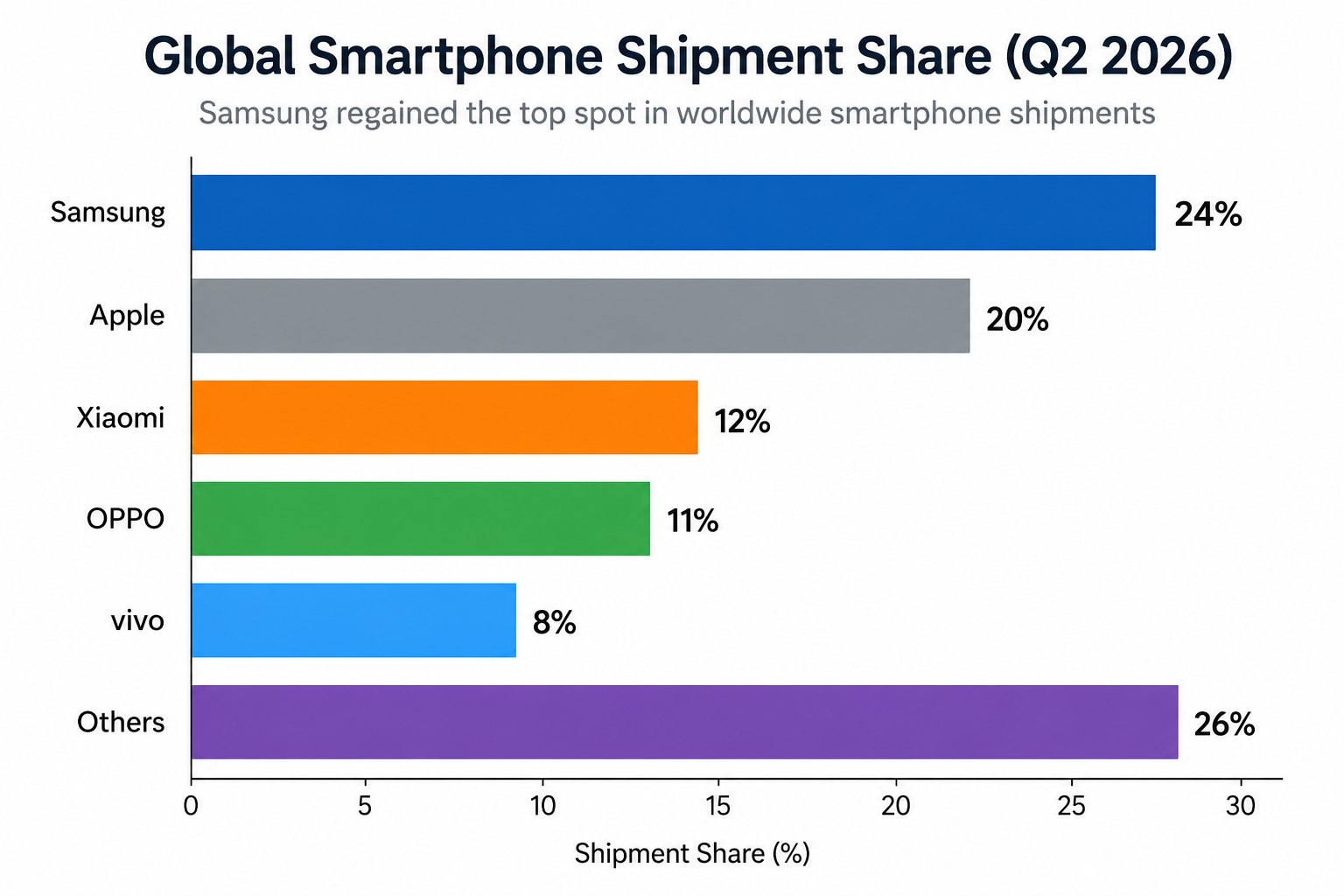
Rather than reflecting a broad market recovery, Samsung's return to first place occurred during a period of industry contraction. Apple remained resilient, increasing shipments by 3% year over year and recording its highest-ever second-quarter shipment share, even as overall demand weakened.
Why Samsung Regained the Lead
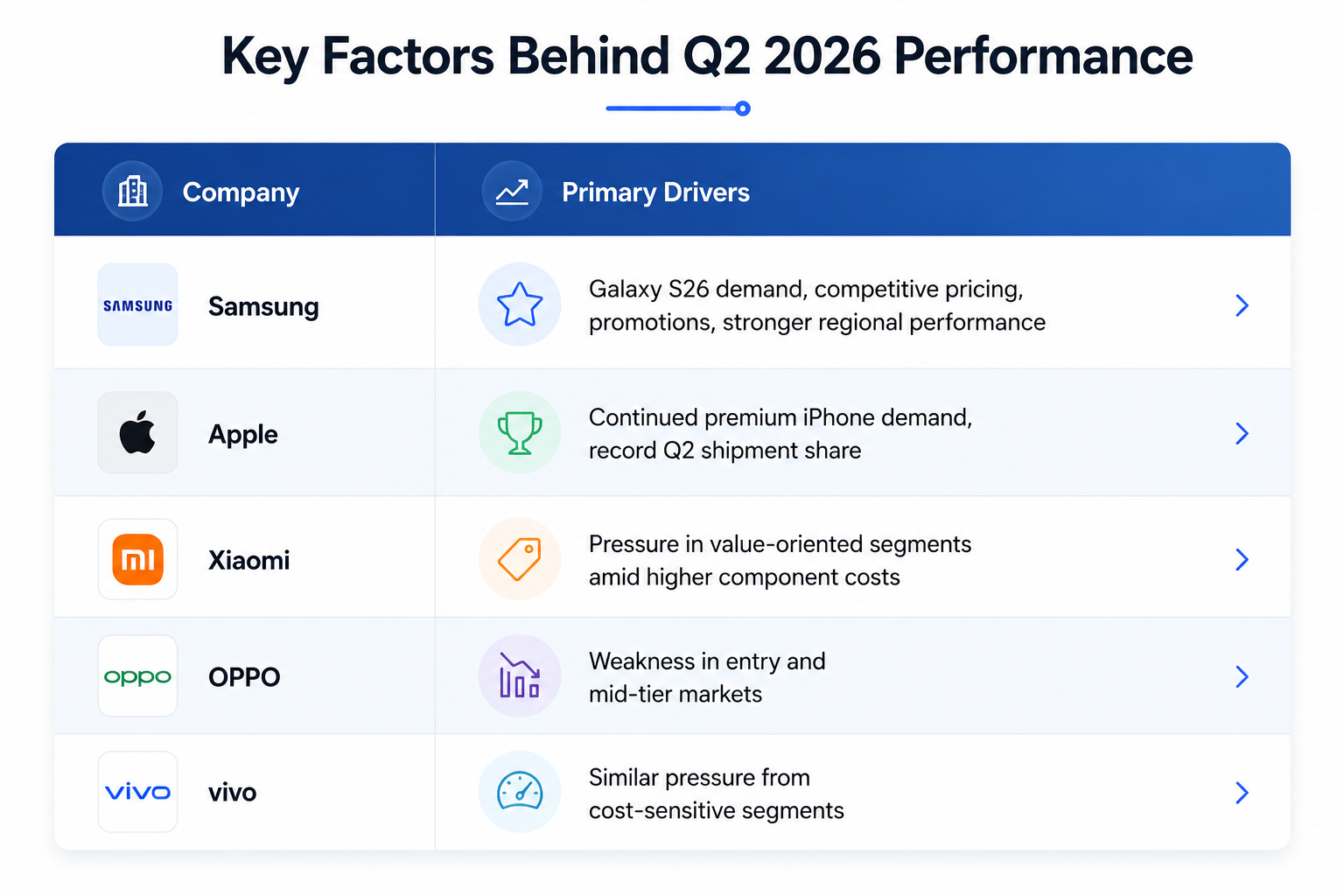
Samsung's performance was driven by a combination of product momentum and regional execution rather than a sudden surge in overall smartphone demand. Counterpoint attributes the company's gains to strong early demand for the Galaxy S26 series, particularly the Ultra model, alongside relatively moderate pricing in key markets such as India and the Middle East. Aggressive seasonal promotions and improved product availability also helped Samsung outperform competitors during a difficult quarter.
Apple, meanwhile, continued to benefit from sustained demand for premium iPhones. Its shipment growth suggests that higher-end smartphones have remained comparatively resilient despite broader economic pressure, although the company was unable to retain the overall volume lead.
Chinese manufacturers faced a more challenging environment. Xiaomi, OPPO and vivo recorded the steepest shipment declines among the five largest vendors, reflecting their heavier exposure to entry-level and mid-range devices, where rising component costs have had the greatest impact on affordability.
Why It Matters
Samsung's return to the top spot highlights that market leadership increasingly depends on execution rather than overall industry growth. For consumers, the report reinforces how component shortages are influencing smartphone pricing. Memory supply constraints have raised production costs across the industry, making aggressive discounting more difficult, particularly for manufacturers competing in budget and mid-range categories.
For Android manufacturers, Samsung's results demonstrate the value of maintaining a diversified product portfolio while preserving flagship momentum. Strong premium devices can offset weakness elsewhere, especially when consumers delay replacing lower-cost phones.
Apple's performance tells a different story. Although it relinquished the top shipment position, the company achieved a record 20% second-quarter shipment share and continued growing volumes during one of the industry's weakest quarters. That resilience suggests premium demand remains comparatively stable, even as overall smartphone sales soften. The broader market trend is equally significant. With global shipments reaching their lowest second-quarter level since 2013, smartphone vendors face mounting pressure from supply-chain constraints, inflation, and cautious consumer spending, all of which are reshaping competitive dynamics beyond a simple Samsung-versus-Apple rivalry.
What's Next
Looking ahead, the smartphone market is likely to remain under pressure as memory shortages and broader economic uncertainty continue to weigh on demand. Samsung's ability to hold onto the top spot will depend on the success of its upcoming flagship launches and improving component availability, while Apple's position could strengthen during its annual iPhone launch cycle later in the year.
Although quarterly leadership may continue to shift as launch schedules change, the larger story is that the smartphone industry is navigating a period where supply constraints, pricing discipline, and premium demand are becoming more influential than overall shipment growth. Those same forces could also influence the resale market. If new smartphone prices remain elevated and consumers delay upgrades, newer flagship devices may retain their value better than in periods of stable supply, as demand for high-quality used phones increases. While it's too early to predict the full impact, trade-in values for premium models on buyback platforms could prove more resilient if supply constraints persist through the remainder of 2026.